EN
EN
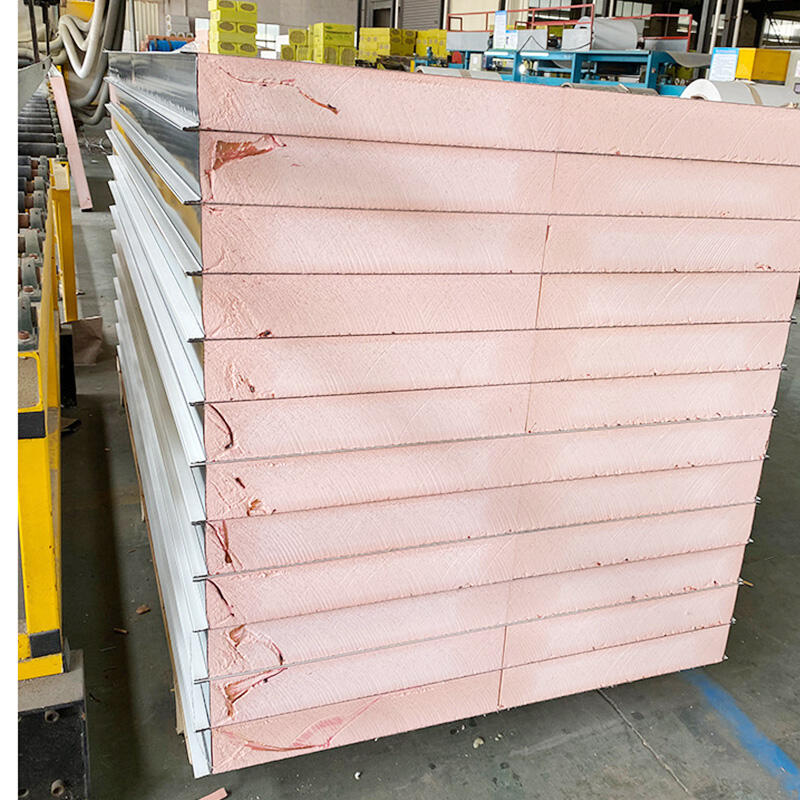
EPS sandwich panels have revolutionized thermal insulation in modern construction by creating a sophisticated barrier system that significantly reduces heat transfer between interior and exterior environments. These engineered building components utilize expanded polystyrene foam as their core insulation material, sandwiched between two structural metal sheets to form a highly effective thermal protection system. Understanding how EPS sandwich panels achieve superior thermal insulation performance requires examining their unique construction methodology and the scientific principles that govern their heat resistance capabilities.
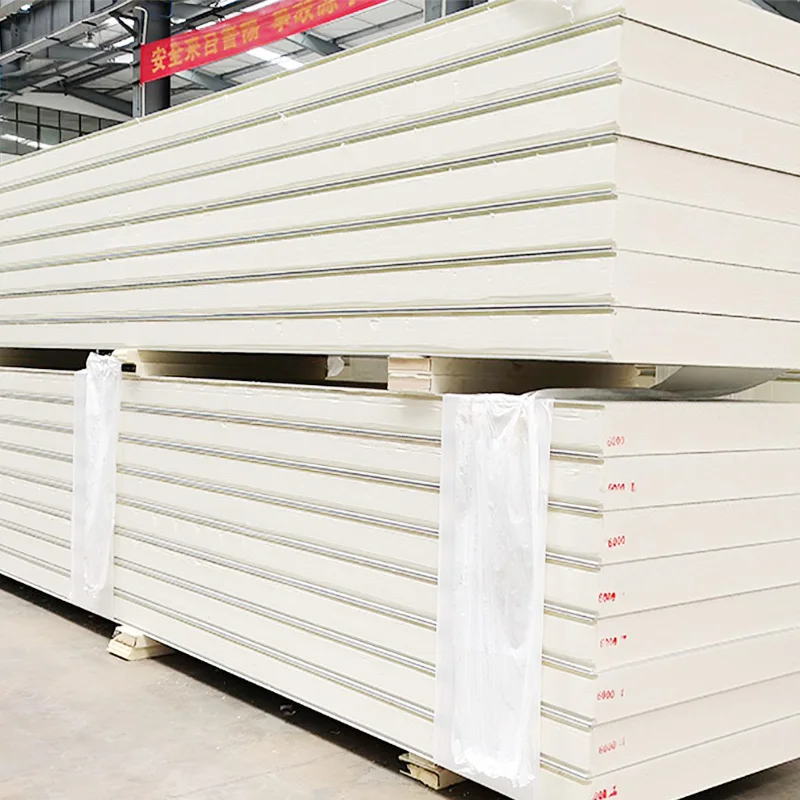
The thermal insulation improvement delivered by EPS sandwich panels stems from their ability to minimize all three modes of heat transfer: conduction, convection, and radiation. The expanded polystyrene core contains millions of tiny air cells that trap air and prevent thermal movement, while the metal facings reflect radiant heat and provide structural integrity. This combination creates a thermal barrier that can reduce heat loss by up to 70% compared to traditional single-layer construction materials, making EPS sandwich panels an essential component for energy-efficient building design.
Core Insulation Mechanism of EPS Sandwich Panels
Cellular Structure and Air Entrapment
The fundamental thermal insulation capability of EPS sandwich panels originates from the cellular structure of expanded polystyrene foam, which consists of approximately 98% trapped air and only 2% polystyrene material. This cellular matrix creates millions of microscopic air pockets that serve as thermal barriers, preventing heat from moving through the panel via conduction. The closed-cell structure ensures that these air spaces remain isolated from each other, maintaining consistent insulation performance over the panel's operational lifetime.
Each individual cell within the EPS core measures between 0.2 to 0.5 millimeters in diameter, creating an extensive network of thermal breaks that interrupt heat flow pathways. The polystyrene cell walls are extremely thin, typically measuring less than 0.001 millimeters, which minimizes the solid material available for conducting heat while maximizing the insulating air volume. This precise cellular engineering allows EPS sandwich panels to achieve thermal conductivity values as low as 0.030 W/mK, significantly outperforming many traditional insulation materials.
Thermal Bridge Elimination
EPS sandwich panels eliminate thermal bridging, a common problem in conventional construction where structural elements create pathways for heat transfer through insulation systems. Traditional framed construction often suffers from thermal bridges at studs, joists, and connection points, where conductive materials bypass insulation layers and compromise overall thermal performance. The continuous EPS core in sandwich panels prevents these thermal shortcuts by maintaining unbroken insulation coverage across the entire panel surface.
The metal facings of EPS sandwich panels are separated by the full thickness of the insulating core, typically ranging from 50mm to 200mm, ensuring that heat cannot conduct directly from the exterior facing to the interior facing. This separation distance is critical for maintaining the thermal resistance of the system, as even small thermal bridges can reduce insulation effectiveness by 20-30%. The engineered connection system between facings and core maintains structural integrity while preserving thermal isolation, creating a building envelope component that performs consistently across its entire surface area.
Heat Transfer Reduction Mechanisms
Conduction Control Through Low Thermal Conductivity
EPS sandwich panels control conductive heat transfer through the exceptionally low thermal conductivity of the expanded polystyrene core material. Conduction occurs when heat moves through solid materials via molecular vibration and electron movement, but the predominantly air-filled structure of EPS dramatically slows this process. The minimal solid polystyrene content provides just enough structural integrity to maintain the cellular matrix while contributing minimal conductive pathways for heat transfer.
The thermal conductivity of quality EPS cores typically ranges from 0.030 to 0.038 W/mK, compared to concrete at 1.4 W/mK or steel at 50 W/mK, demonstrating the dramatic reduction in heat conduction potential. This low conductivity value means that EPS sandwich panels can maintain significant temperature differences between their interior and exterior surfaces with minimal heat flow. The relationship between EPS density and thermal performance has been optimized to provide the lowest practical thermal conductivity while maintaining sufficient compressive strength for structural applications.
Convection Prevention Within Panel Structure
Convective heat transfer, which occurs when moving air carries thermal energy from warm to cool areas, is effectively prevented within EPS sandwich panels through their closed-cell foam structure. Unlike open-cell insulation materials that can allow air movement within their structure, the closed cells of EPS completely isolate air pockets and prevent internal air circulation that could transport heat across the panel thickness.
This convection control extends to the panel assembly level, where proper installation of EPS sandwich panels eliminates air gaps and cavities that could allow convective heat transfer within the building envelope. The tight joints and continuous insulation barrier created by properly installed EPS sandwich panels prevent air infiltration that can significantly compromise thermal performance in traditional construction assemblies. Studies indicate that controlling air infiltration through continuous insulation systems like EPS sandwich panels can improve overall building thermal performance by 15-25% compared to systems that rely solely on cavity insulation.
Thermal Performance Factors and Optimization
Core Thickness Impact on Insulation Value
The thermal insulation effectiveness of EPS sandwich panels increases proportionally with core thickness, as greater insulation depth provides more resistance to heat flow. Standard EPS sandwich panels are available in core thicknesses ranging from 50mm to 200mm, with each increase in thickness providing corresponding improvements in R-value, the measure of thermal resistance. A 100mm thick EPS core typically provides an R-value of approximately 2.6 to 3.3 m²K/W, while a 150mm core can achieve R-values exceeding 5.0 m²K/W.
The relationship between EPS sandwich panel thickness and thermal performance follows established insulation principles, where doubling the thickness approximately doubles the thermal resistance. However, practical considerations including structural requirements, building codes, and economic factors influence the optimal core thickness selection for specific applications. Climate zone requirements often dictate minimum R-values that can be achieved through appropriate EPS sandwich panel thickness selection, ensuring that thermal insulation performance meets energy efficiency standards and occupant comfort requirements.
Density Optimization for Maximum Thermal Efficiency
The density of EPS core material directly affects the thermal insulation performance of sandwich panels, with optimization occurring at densities between 15-25 kg/m³ for most building applications. Lower density EPS contains more air and fewer solid polystyrene components, providing superior thermal resistance, while higher densities offer increased structural strength but somewhat reduced insulation effectiveness. The engineering challenge involves balancing thermal performance with mechanical requirements to create EPS sandwich panels that meet both insulation and structural performance criteria.
Manufacturing processes can precisely control EPS density during the expansion process, allowing for customization of thermal properties to match specific application requirements. For cold storage applications requiring maximum thermal insulation, lower density EPS cores maximize thermal resistance, while structural applications may require higher density cores to meet load-bearing requirements. Advanced EPS sandwich panels may incorporate density graduation within the core, with lower density material toward the center for thermal performance and higher density material near the facings for structural capability.
Integration Advantages in Building Envelope Systems
Continuous Insulation Coverage
EPS sandwich panels provide continuous insulation coverage that eliminates the thermal performance gaps commonly found in traditional framed construction systems. This continuous coverage ensures that thermal insulation effectiveness remains consistent across the entire building envelope, preventing localized heat loss areas that can compromise overall building energy performance. The elimination of insulation gaps and thermal bridges can improve whole-building thermal performance by 20-40% compared to conventional construction methods.
The modular nature of EPS sandwich panels allows for systematic installation that maintains insulation continuity at panel joints through engineered connection systems. Proper joint design and installation techniques ensure that the thermal barrier remains unbroken across panel interfaces, maintaining the insulation integrity of the complete building envelope system. This systematic approach to continuous insulation coverage supports compliance with increasingly stringent building energy codes and contributes to achieving high-performance building certifications.
Moisture Resistance and Long-Term Performance
EPS sandwich panels maintain their thermal insulation performance over time through inherent moisture resistance that prevents the degradation commonly experienced by other insulation materials. The closed-cell structure of EPS prevents water absorption that can significantly reduce thermal resistance in other foam insulation types. Even in high-humidity environments or direct water exposure, quality EPS maintains its cellular structure and insulation effectiveness without deterioration.
Long-term thermal performance stability of EPS sandwich panels has been validated through decades of field performance data and accelerated aging tests. Unlike insulation materials that can settle, compress, or absorb moisture over time, properly manufactured EPS sandwich panels maintain their dimensional stability and thermal properties throughout their service life. This performance consistency ensures that the thermal insulation benefits achieved at installation continue to provide energy savings and comfort benefits for the building's operational lifetime, typically 30-50 years or more.
FAQ
What makes EPS sandwich panels more thermally efficient than traditional insulation methods?
EPS sandwich panels achieve superior thermal efficiency through their continuous closed-cell foam structure that eliminates thermal bridges and provides consistent insulation coverage. Unlike traditional cavity insulation systems that can have gaps, compression, and thermal bridges at framing members, EPS sandwich panels maintain uniform thermal resistance across their entire surface area, resulting in 20-40% better overall building thermal performance.
How does the thickness of EPS core affect thermal insulation performance?
The thermal insulation performance of EPS sandwich panels increases proportionally with core thickness, with each additional 25mm of EPS typically adding approximately 0.65-0.85 m²K/W of thermal resistance. A 150mm EPS core provides roughly 50% better thermal insulation than a 100mm core, allowing designers to select appropriate thicknesses to meet specific climate requirements and energy efficiency targets.
Do EPS sandwich panels maintain their thermal performance over time?
Yes, EPS sandwich panels maintain stable thermal performance throughout their service life due to the closed-cell structure that resists moisture absorption, dimensional changes, and cellular degradation. Independent testing and decades of field performance data confirm that properly manufactured EPS sandwich panels retain over 95% of their initial thermal resistance after 25+ years of service, ensuring consistent energy performance throughout the building's lifetime.
Can EPS sandwich panels help reduce heating and cooling costs?
EPS sandwich panels can reduce building heating and cooling costs by 30-60% compared to conventional construction methods through their superior thermal insulation properties and elimination of thermal bridges. The continuous insulation coverage and high R-values achievable with EPS sandwich panels significantly reduce heat transfer through the building envelope, resulting in lower energy consumption for maintaining comfortable interior temperatures year-round.