EN
EN
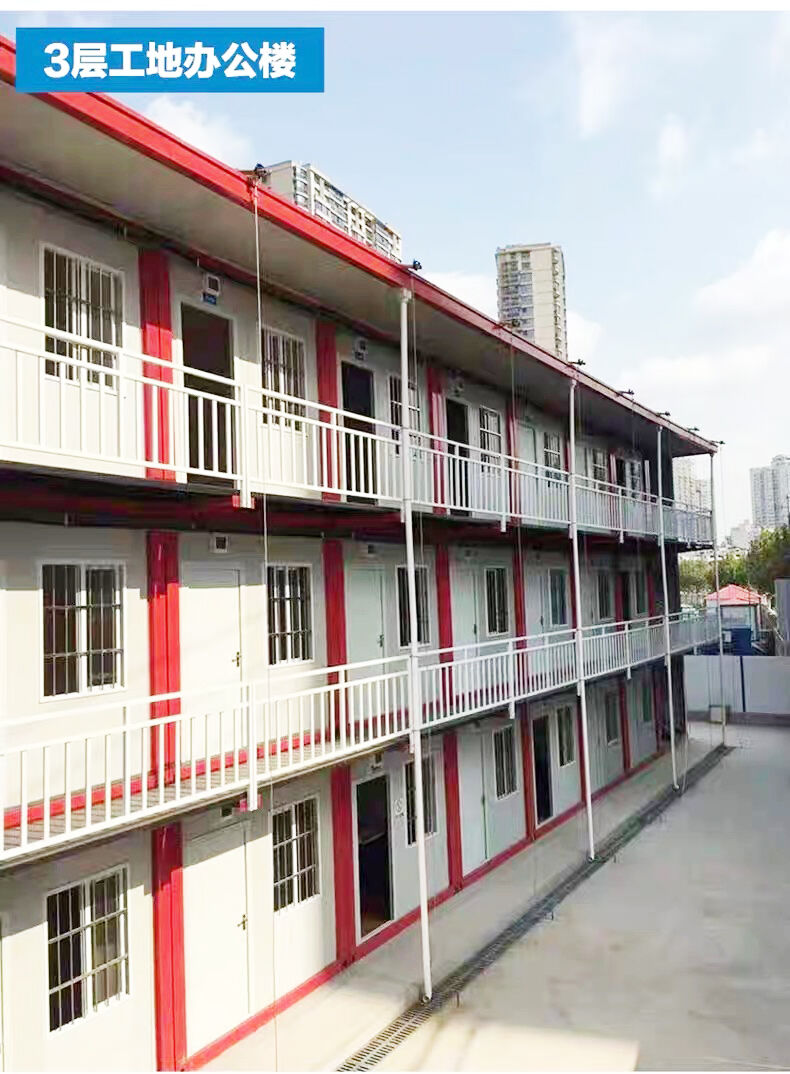
The construction industry has long grappled with two of its most persistent challenges: time overruns and escalating labor costs. As project owners, developers, and contractors search for smarter building solutions, prefab houses have emerged as one of the most compelling answers available today. These factory-built structures are engineered to reduce nearly every inefficiency that plagues traditional site-based construction, delivering completed buildings in a fraction of the time and with significantly fewer worker-hours on site.
Understanding how prefab houses actually achieve these time and labor savings requires looking beyond the surface-level appeal of modular aesthetics. The mechanics behind the efficiency gains are rooted in industrial process design, parallel workflow engineering, and precision manufacturing — all of which work together to compress project timelines and minimize the number of skilled workers needed on any given job site. This article breaks down the specific mechanisms that make prefab houses so effective at cutting construction time and labor expenditure.
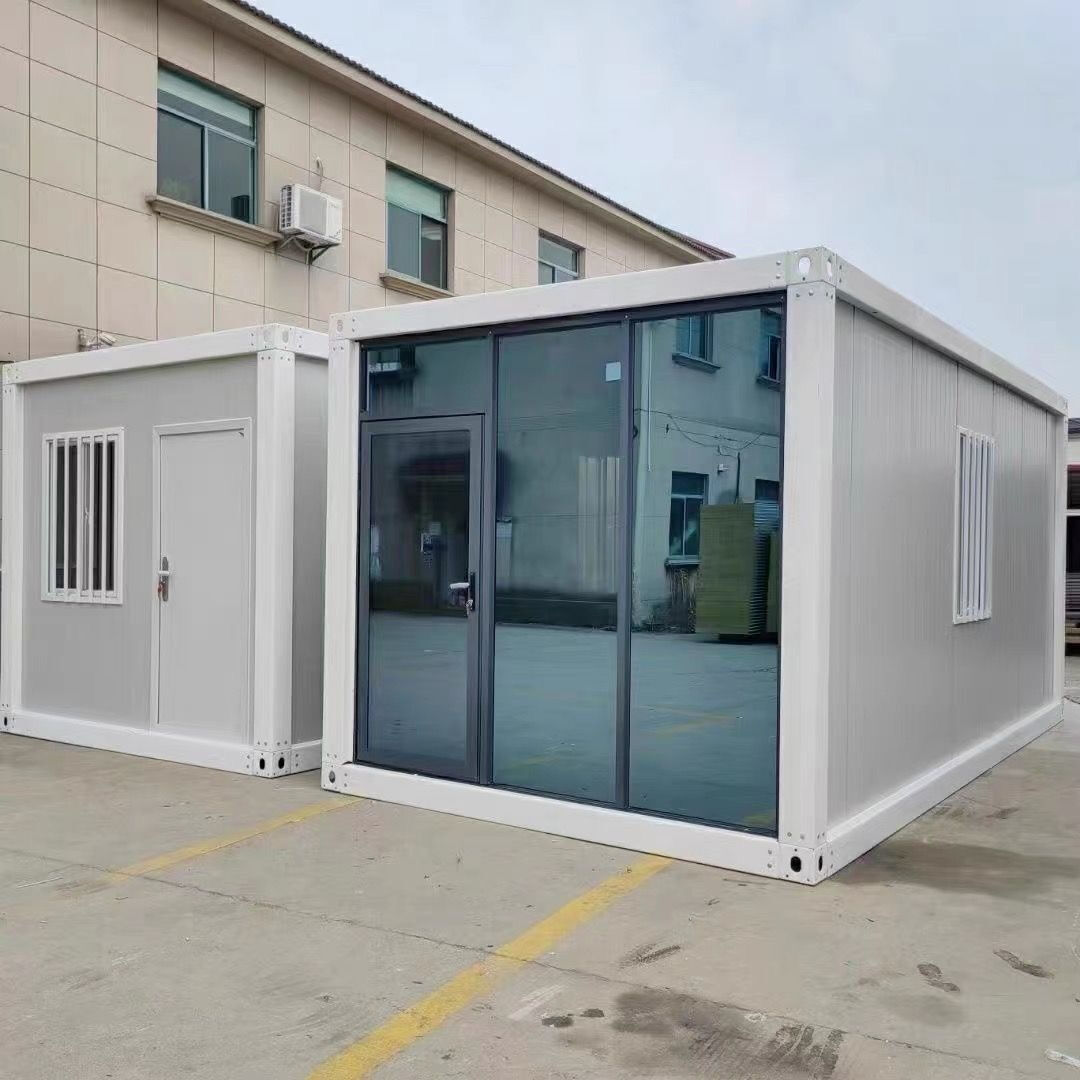
The Core Principle Behind Prefab Construction Efficiency
Factory Manufacturing Versus Site-Based Building
The fundamental reason prefab houses save time begins with where the work happens. In traditional construction, virtually every task is performed at the job site, which means weather delays, logistical bottlenecks, and sequential task dependencies all slow progress. A concrete pour cannot happen until formwork is complete; electrical rough-in cannot start until framing is done; waterproofing must wait for the structure to dry. Each dependency compounds the overall timeline.
In prefab construction, the primary building components are manufactured inside a controlled factory environment. This setting eliminates weather-related stoppages entirely. Rain, extreme heat, frost, or seasonal disruptions that regularly halt site work simply do not affect factory operations. The result is a far more predictable production schedule that can be measured in days rather than months of contingency-padded estimates.
Factory environments also support repetitive, streamlined workflows. Workers in a prefab manufacturing facility perform the same assembly tasks repeatedly, building speed and precision with every unit produced. This is fundamentally different from the variable, custom-built nature of on-site construction where teams must adapt to unique site conditions on every project. The industrial consistency of factory production directly translates into faster assembly times and fewer costly errors.
Parallel Workflow: Site Preparation and Building Production Simultaneously
One of the most significant time-saving advantages of prefab houses is the ability to run site preparation and building production at the same time. In a conventional project, a contractor must complete grading, foundation work, and utility connections before any structural work can begin. This linear approach means the clock doesn't really start on the building itself until weeks or months into the project.
With prefab houses, the factory begins manufacturing wall panels, roof trusses, floor modules, and structural components as soon as the design is finalized — regardless of what is happening on site. While the foundation is being poured and services are being routed underground, the entire building shell is being assembled in a controlled environment. By the time site preparation is complete, the building components are often ready for delivery and installation.
This parallel workflow can compress total project duration by 30 to 50 percent in many documented applications. For commercial operators, workforce housing providers, or emergency shelter developers, this kind of schedule compression is not merely convenient — it is financially critical. Faster project completion means earlier occupancy, earlier revenue generation, and reduced holding costs during construction.
Labor Reduction Mechanisms in Prefab Construction
Reduced On-Site Worker Requirements
Labor accounts for a significant portion of any construction budget, and on-site labor is typically the most expensive category. Skilled tradespeople — carpenters, electricians, plumbers, roofers, and finishers — command premium wages, and coordinating multiple trades on a single site is logistically complex and time-consuming. Prefab houses dramatically reduce the number of skilled workers needed on-site by shifting most of that work to the factory floor.
When building components arrive at the site pre-assembled, pre-wired, and pre-finished to high tolerances, the on-site team shifts from being builders to being assemblers. Rather than constructing each element from raw materials, workers are connecting pre-made modules, completing service connections, and finishing joints. This process requires far fewer total labor hours and can often be accomplished by a smaller crew than traditional construction would require.
For projects in remote locations, labor-scarce regions, or markets with high wage costs, this reduction in on-site labor requirements is one of the most compelling economic arguments for choosing prefab houses. Logistics may add some cost, but the savings in skilled labor frequently outweigh transportation expenses by a substantial margin.
Minimized Waste and Rework Costs
Rework is one of the most insidious labor costs in traditional construction. Mistakes made during on-site building must be corrected on-site, consuming additional worker-hours and materials. Misaligned frames, incorrectly sized openings, plumbing errors, and finishing defects all require skilled labor to diagnose and repair — often at premium rates if the fix must happen on an urgent schedule.
Prefab houses mitigate rework significantly through precision manufacturing. Factory production involves systematic quality checks at each stage of assembly. Dimensional tolerances are enforced mechanically rather than relying on individual craftsmanship in variable field conditions. The result is components that fit together as designed, reducing installation errors and the labor cost of correcting them.
Material waste is also reduced in factory settings through optimized cutting patterns, material tracking systems, and the ability to reuse offcuts within the production process. Less waste means fewer materials to purchase, fewer delivery cycles, and less waste removal work on site — all of which translate into saved hours and reduced costs across the project lifecycle.
Prefab Houses in Different Application Scenarios
Workforce Housing and Labor Camp Applications
Prefab houses are widely used in workforce housing and labor camp projects precisely because speed and scalability are essential in those contexts. Mining operations, energy infrastructure projects, and large-scale agricultural enterprises often need to house hundreds of workers in remote locations with minimal lead time. Traditional construction simply cannot meet those timelines within budget, especially when local skilled labor is limited and materials must be imported.
In workforce housing applications, prefab houses allow operators to deploy functional, habitable accommodation in a matter of weeks. Units arrive with integrated sleeping quarters, electrical systems, and often sanitary facilities already installed. On-site assembly teams can erect multiple units per day, scaling the installation pace to match operational demand. This kind of rapid deployment capability has made prefab solutions the standard approach in many resource-sector housing programs.
The prefab houses designed for these demanding environments are engineered with structural resilience in mind, ensuring they can withstand site-specific climate conditions while remaining relocatable when project needs change. This combination of speed, durability, and flexibility is difficult to achieve with conventional construction methods.
Commercial and Hospitality Fast-Build Projects
Commercial developers and hospitality operators have increasingly turned to prefab houses and prefabricated modular systems for fast-track projects where revenue timelines are tightly connected to construction completion dates. A resort developer opening a seasonal property, for instance, cannot afford a three-month construction delay without direct financial consequences. Prefab construction makes tight delivery windows achievable in a way that traditional methods cannot reliably guarantee.
For office annexes, site offices, retail kiosks, security booths, and on-site management facilities, prefab houses and modular structures can be deployed and made operational within days of delivery. This agility enables businesses to respond to operational needs quickly without waiting for lengthy construction permits and extended build schedules.
The quality standards achievable in modern prefab houses also mean that these buildings are no longer perceived as temporary or inferior. Contemporary prefab design incorporates thermal insulation, ventilation systems, and interior finishes that rival site-built alternatives, making them suitable for customer-facing commercial applications as well as back-of-house operations.
Structural and Design Factors That Enable Speed
Standardized Connection Systems
The speed of on-site assembly for prefab houses is greatly enhanced by standardized connection systems built into the components during manufacturing. Rather than relying on custom joinery or site-measured fitting, prefab components are designed with engineered connectors, pre-drilled bolt patterns, and interlocking interfaces that guide assembly intuitively. Workers do not need to calculate, measure, or adapt — they simply connect engineered interfaces that are designed to fit precisely.
This standardization has a powerful multiplicative effect on labor efficiency. A two-person team using standardized prefab components can assemble structural sections that would require a full crew of five or six workers using traditional methods. The precision of the components also means less time is spent on alignment adjustments, shimming, or corrective modifications during installation.
When prefab houses are designed for disassembly and relocation — as many are — the same standardized connections that speed up assembly also enable quick breakdown and reassembly at a new site. This reusability adds long-term value to the investment and reduces total lifecycle labor costs substantially compared to structures that must be demolished and rebuilt.
Pre-Installed Systems and Finishes
One of the most underappreciated labor-saving features of quality prefab houses is the degree to which building systems arrive pre-installed. Electrical conduit, wiring, and switch boxes may already be integrated into wall panels. Insulation is factory-applied to the correct specifications. Interior wall finishes, flooring, and ceiling panels may arrive ready to connect rather than ready to install from scratch.
Each pre-installed element represents hours of on-site trade work that simply does not need to happen at the project site. An electrician who might spend a week pulling wire through a conventionally framed structure can complete service connections in a prefab building in a single day because the conduit runs are already in place. A painter who would normally spend days priming and finishing rough walls may only need to touch up seams and edges.
The cumulative effect of pre-installed systems across every trade category is one of the clearest explanations for why prefab houses consistently deliver buildings with dramatically fewer labor-hours than equivalent site-built structures. The factory has already done the work — the site crew simply completes the connections and commissions the systems.
Long-Term Labor Cost Implications of Choosing Prefab
Predictable Project Costing and Fewer Change Orders
One of the hidden labor costs in traditional construction is the change order cycle. Design ambiguities, site discoveries, material substitutions, and client modifications all generate change orders that require new labor estimates, rework, and schedule adjustments. Each change order consumes management time, trade time, and administrative resources that collectively add meaningful cost to any project.
Prefab houses are designed and detailed before manufacturing begins, which forces most design decisions to be resolved upfront. The engineering precision required for factory production eliminates many of the ambiguities that generate change orders on traditional projects. When designs are fully resolved before production, the scope of on-site work is clearly defined, and the labor cost to deliver that scope is accurately predictable.
This predictability is valuable to clients and contractors alike. Developers can underwrite project financials with confidence, knowing that labor cost blowouts are far less likely. Contractors can allocate workforce resources efficiently without holding buffer crews on standby for unpredictable scope changes. The stability of prefab-based project management creates genuine financial value across every stakeholder in the construction chain.
Scalability Without Proportional Labor Increases
Another long-term labor advantage of prefab houses is the ability to scale project size without proportionally scaling the on-site workforce. Because factory production can increase output by adjusting shift schedules and production line capacity, doubling the number of units does not necessarily require doubling the construction crew. The factory absorbs the scale; the site team remains focused on assembly and commissioning.
This scalability is particularly relevant for developers who operate recurring projects — resort expansions, student accommodation rollouts, or phased residential developments. With prefab houses, subsequent phases benefit from accumulated production efficiency, established logistics chains, and refined assembly procedures. Each project phase takes less time and labor than the first, creating a compounding efficiency advantage over the course of a multi-phase development.
For organizations managing large-scale housing or accommodation programs, the scalability of prefab houses transforms construction from a capacity constraint into a manageable, forecastable supply chain challenge. That shift in mindset — from construction as a bottleneck to construction as a supply chain — is one of the most strategically important implications of adopting prefab methods at scale.
FAQ
How much faster is prefab construction compared to traditional building methods?
In most documented applications, prefab houses are completed 30 to 50 percent faster than comparable site-built structures. The exact time saving depends on the complexity of the project, site conditions, and the degree of factory pre-completion, but the parallel workflow advantage alone — where factory production and site preparation happen simultaneously — typically delivers several months of schedule compression on medium to large projects.
Do prefab houses require specialized labor for assembly?
Assembly of prefab houses generally requires a smaller crew than traditional construction, and the skill requirements are often lower because the primary tasks involve connecting pre-engineered components rather than crafting structural elements from raw materials. Some trade specialization is still needed for final service connections, but the total workforce demand is substantially reduced compared to conventional building approaches.
Are prefab houses suitable for permanent use or only temporary applications?
Modern prefab houses are engineered to meet the structural, thermal, and safety standards required for permanent habitation in most regulatory environments. While some prefab products are designed specifically for temporary or relocatable use, many are built to the same durability standards as conventional structures and are suitable for long-term permanent occupancy in residential, commercial, and industrial applications.
What types of projects benefit most from using prefab houses?
Prefab houses deliver the greatest advantages in projects where schedule certainty is critical, skilled labor is scarce or expensive, the site is remote or difficult to access, or multiple identical units are required. Workforce housing, hospitality accommodation, emergency shelters, student residences, and site office facilities are among the highest-benefit application categories for prefab construction methods.