EN
EN
Selecting the right PU sandwich panel for your project is one of the most consequential decisions you will make during the design and procurement phase. Whether you are constructing a cold storage facility, a clean room, an industrial warehouse, or a prefabricated building, the performance of your envelope system depends heavily on the quality, specification, and configuration of the panels you choose. A poorly matched PU sandwich panel can lead to thermal inefficiency, structural compromise, moisture ingress, and costly remediation down the line.
This guide is designed to walk you through the key selection criteria that experienced engineers, procurement managers, and project developers use when evaluating a PU sandwich panel. From core density and thickness to facing materials, fire ratings, and application-specific requirements, understanding these factors will help you make a confident, well-informed decision that serves your project's technical and commercial goals.
Understanding What a PU Sandwich Panel Actually Is
The Basic Composition and Why It Matters
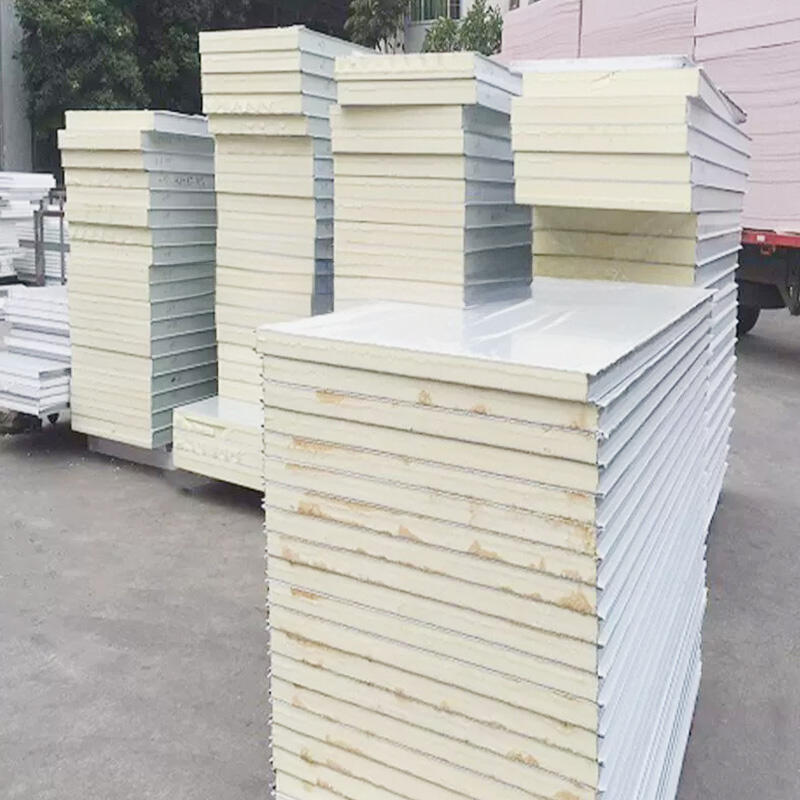
A PU sandwich panel consists of three bonded layers: two rigid outer facings and a polyurethane foam core injected and cured between them. The polyurethane core is what gives this panel type its exceptional thermal insulation performance, with a thermal conductivity value typically ranging between 0.022 and 0.028 W/m·K. This makes the PU sandwich panel one of the most thermally efficient building envelope solutions available in the market today.
The outer facings are most commonly made from pre-painted galvanized steel or aluminum, though other materials such as stainless steel are used in specialized environments. The profile of the facing — whether flat, micro-ribbed, or corrugated — affects both the aesthetic appearance and the structural rigidity of the finished panel. Understanding this composition is the starting point for making the right selection, because every performance characteristic flows from how these three layers interact.
The bond between the foam core and the facings is also critical. A well-manufactured PU sandwich panel achieves full adhesion across the entire panel surface, which prevents delamination under thermal cycling, mechanical stress, or moisture exposure. When evaluating suppliers, asking about their continuous double-belt press manufacturing process is a reliable indicator of consistent bond quality.
How PU Differs from Other Sandwich Panel Types
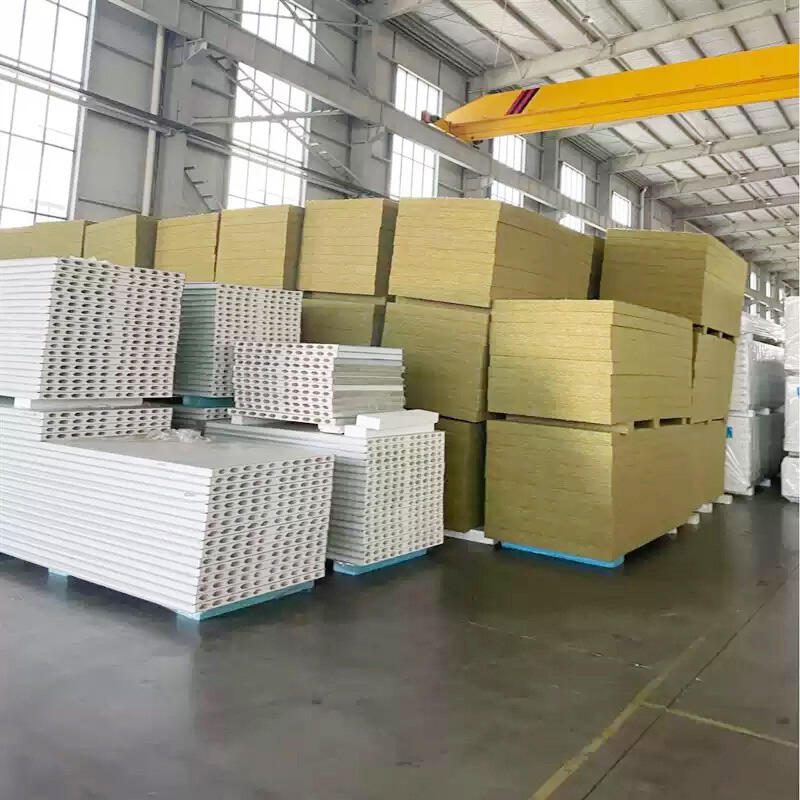
The market offers several sandwich panel core materials, including mineral wool (rock wool), EPS (expanded polystyrene), and PIR (polyisocyanurate). Each has its own performance profile. The PU sandwich panel stands apart primarily because of its superior thermal resistance per unit thickness, which means you can achieve the same insulation value with a thinner panel compared to EPS or mineral wool alternatives.
This thickness advantage is particularly valuable in cold storage and clean room applications where interior space is at a premium and every centimeter of wall thickness translates directly into usable floor area. However, it is important to acknowledge that mineral wool panels offer better inherent fire resistance, which is why the choice between panel types must always be driven by the specific demands of your project rather than a single performance metric.
For projects where thermal efficiency is the dominant requirement — refrigerated warehouses, pharmaceutical cold chains, food processing facilities — the PU sandwich panel consistently delivers the best balance of insulation performance, panel weight, and installation speed. For projects where fire performance is the overriding concern, a hybrid approach or a PIR-core panel may be more appropriate.
Key Technical Specifications to Evaluate
Panel Thickness and Thermal Performance
Panel thickness is the most direct lever for controlling thermal performance. A PU sandwich panel is commonly available in thicknesses of 50mm, 75mm, 100mm, and 150mm, with each increment delivering a proportionally higher thermal resistance (R-value). For standard industrial buildings in temperate climates, a 50mm or 75mm PU sandwich panel is often sufficient for walls. For cold storage rooms operating at 0°C to -5°C, 100mm is a common specification. For deep-freeze applications at -18°C or below, 150mm panels are typically required.
When calculating the required thickness, you should work from the inside out: define your target interior temperature, account for the local external design temperature, and then calculate the required U-value for the envelope. From the U-value, you can back-calculate the minimum foam thickness needed. Always add a safety margin and consult with a thermal engineer if the application involves critical temperature control, such as pharmaceutical storage or blast freezing.
It is also worth noting that the declared thermal conductivity of the foam can degrade over time as the blowing agent diffuses out of the closed cells. A high-quality PU sandwich panel uses a foam formulation with a stable long-term lambda value, and reputable manufacturers will provide aged thermal conductivity data rather than only the initial value.
Core Density and Structural Integrity
Core density is a specification that is frequently overlooked by buyers focused solely on price, yet it has a direct impact on the mechanical performance and longevity of the PU sandwich panel. Standard core densities range from approximately 38 kg/m³ to 42 kg/m³ for wall panels and slightly higher for roof panels that must carry additional loads. Panels with core densities below 36 kg/m³ are generally considered substandard and are more susceptible to point load damage, fastener pull-through, and long-term creep.
For roof applications, the PU sandwich panel must also be evaluated for its spanning capability — the maximum distance between purlins that the panel can bridge without excessive deflection under snow load, wind uplift, or maintenance foot traffic. Manufacturers typically provide load-span tables for their panels, and these should be reviewed carefully against your structural grid before finalizing the specification.
In clean room and food processing environments, the panel must also resist the mechanical impact of cleaning equipment, trolleys, and forklifts. In these cases, specifying a higher-density core or adding protective corner guards and bumper rails is a practical measure that extends the service life of the installation.
Facing Material Selection for Your Specific Environment
Steel Facings: Gauges, Coatings, and Profiles
The most widely used facing for a PU sandwich panel is pre-painted galvanized steel, typically in thicknesses ranging from 0.4mm to 0.6mm. The steel substrate is hot-dip galvanized for corrosion resistance, then coated with a polyester or PVDF paint system. Standard polyester coatings offer good performance in normal industrial environments, while PVDF coatings provide superior UV resistance and color retention for exterior applications in harsh climates or coastal zones.
For food processing facilities, pharmaceutical plants, and clean rooms, the interior facing of the PU sandwich panel is often specified in a smooth or micro-embossed finish that minimizes surface irregularities where bacteria or contaminants could accumulate. In these environments, the paint system must also be compatible with the cleaning agents and disinfectants used in the facility, including chlorine-based and acidic cleaners.
The profile of the facing — whether it is a flat panel, a lightly ribbed panel, or a standing seam profile — affects both the visual appearance and the panel's resistance to oil-canning (the waviness that can appear in flat metal surfaces under thermal expansion). For large uninterrupted wall surfaces, a lightly profiled facing is generally preferred because it masks minor surface irregularities and provides a more consistent appearance over the life of the building.
Stainless Steel and Aluminum Facings for Specialized Applications
In environments where hygiene requirements are extremely stringent, or where chemical exposure is a concern, stainless steel facings are specified for the PU sandwich panel. Grade 304 stainless steel is the standard choice for food and pharmaceutical applications, while Grade 316 is used where chloride exposure is a risk, such as in marine environments or facilities using saline cleaning solutions. Stainless steel facings are significantly more expensive than painted steel, but they offer unmatched durability and cleanability in demanding environments.
Aluminum facings are another option, particularly valued for their light weight and natural corrosion resistance. An aluminum-faced PU sandwich panel is commonly used in portable or modular structures, refrigerated transport containers, and applications where minimizing dead load is a structural priority. Aluminum does not require a paint coating for corrosion protection, though anodized or coated finishes are available for aesthetic purposes.
When selecting facing materials, always consider the full lifecycle of the building, including the cleaning regime, the chemical environment, the expected service life, and the maintenance budget. The facing material is the first line of defense for the panel, and specifying it correctly from the outset avoids costly replacement or remediation in the future.
Application-Specific Selection Criteria
Cold Storage and Refrigerated Warehouses
Cold storage is arguably the most demanding application for a PU sandwich panel, and it is also the application where the panel's thermal performance has the most direct impact on operating costs. In a refrigerated warehouse, the energy consumed by the refrigeration system is directly proportional to the heat gain through the building envelope. A well-specified PU sandwich panel with the correct thickness and a high-quality foam core can reduce refrigeration energy consumption by 20% to 30% compared to a poorly insulated alternative.
For cold storage applications, the panel joint system is as important as the panel itself. The joint between adjacent panels must be thermally broken and airtight to prevent condensation, frost formation, and thermal bridging. Cam-lock or tongue-and-groove joint systems are standard in cold storage construction, and the quality of the joint seal — typically a factory-applied polyurethane sealant — should be verified before procurement.
Floor panels and ceiling panels in cold storage rooms have different load requirements than wall panels, and the PU sandwich panel specification should be adjusted accordingly. Ceiling panels must carry their own weight plus any suspended equipment, while floor panels in walk-in coolers must resist the point loads from racking systems and forklift traffic. Always confirm the load-bearing specification with the manufacturer before finalizing the design.
Clean Rooms and Controlled Environment Facilities
Clean rooms require a PU sandwich panel that delivers not only thermal performance but also airtightness, surface hygiene, and compatibility with the facility's classification requirements. In ISO Class 5 to Class 8 clean rooms, the wall and ceiling panels must form a continuous, sealed envelope with no gaps, cracks, or surface irregularities that could harbor contaminants or disrupt airflow patterns.
The panel surface finish in a clean room application is typically a smooth, high-gloss coating that is easy to wipe down and resistant to the cleaning agents used in the facility. Some clean room operators specify an antimicrobial coating on the interior facing of the PU sandwich panel as an additional hygiene measure, though this should be evaluated carefully against the specific microbial risks in the facility.
Electrical conduits, service penetrations, and equipment mounting points must all be carefully detailed in a clean room panel installation to maintain the integrity of the envelope. Pre-engineered penetration sleeves and sealed junction boxes are standard practice, and the PU sandwich panel supplier should be able to provide technical guidance on how to detail these elements correctly.
Evaluating Quality, Compliance, and Supplier Capability
Certifications and Fire Performance Standards
When procuring a PU sandwich panel for a commercial or industrial project, verifying compliance with relevant fire performance standards is not optional — it is a fundamental due diligence requirement. Depending on your project location and building classification, the panels may need to comply with standards such as EN 13501 (Europe), FM Approval (North America), or local national building codes. Fire performance is typically characterized by reaction-to-fire class (e.g., B-s2,d0 under EN 13501-1) and fire resistance rating (e.g., EI 30 or EI 60 under EN 13501-2).
A reputable PU sandwich panel manufacturer will be able to provide third-party test certificates for their products, not just self-declared compliance. Always request the actual test reports and verify that the tested product configuration — thickness, facing type, joint system — matches the specification you are procuring. Substituting a different facing thickness or profile can invalidate the fire test certificate.
Beyond fire performance, look for quality management certifications such as ISO 9001, which indicate that the manufacturer operates a documented and audited quality system. For projects in regulated industries such as pharmaceuticals or food processing, additional certifications related to food contact safety or GMP compliance may be required.
Assessing Manufacturing Consistency and Technical Support
The quality of a PU sandwich panel is only as consistent as the manufacturing process that produces it. Continuous double-belt press lines, which inject and cure the foam under controlled temperature and pressure conditions, produce panels with more uniform density, better adhesion, and tighter dimensional tolerances than discontinuous or batch production methods. When evaluating suppliers, ask about their production technology and request dimensional tolerance data for thickness, flatness, and squareness.
Technical support capability is another differentiator that matters significantly on complex projects. A supplier who can provide detailed installation drawings, load-span tables, thermal calculation support, and on-site technical assistance adds real value beyond the panel itself. For large or technically demanding projects, consider visiting the manufacturing facility before placing an order to assess production quality firsthand.
Lead time and logistics are practical considerations that are easy to overlook during the specification phase but can have a significant impact on project schedules. Confirm the manufacturer's standard lead times, minimum order quantities, and packaging specifications early in the procurement process. Panels that arrive damaged due to inadequate packaging or improper handling during transport can cause costly delays and rework on site.
FAQ
What thickness of PU sandwich panel should I use for a cold storage room at -18°C?
For a deep-freeze cold storage room operating at -18°C, a PU sandwich panel thickness of 150mm is the standard specification in most climates. In extremely cold external environments, or for blast freezing applications at lower temperatures, a thermal calculation should be performed to confirm whether additional thickness is required. Always verify the panel's declared thermal conductivity value and use aged lambda data rather than initial values for accurate long-term performance calculations.
How do I verify the quality of a PU sandwich panel before purchasing?
Request third-party test certificates for fire performance, thermal conductivity, and core density. Ask the manufacturer for dimensional tolerance data and inquire about their production technology — continuous double-belt press lines are the industry benchmark for consistent quality. If the project scale justifies it, consider a factory audit or request sample panels for independent testing before committing to a full order.
Can a PU sandwich panel be used for both walls and roofs?
Yes, the PU sandwich panel is manufactured in configurations suitable for both wall and roof applications, but the specifications differ. Roof panels typically require a higher core density, a more robust facing profile, and a steeper minimum pitch to ensure adequate drainage. Wall panels and roof panels should not be interchanged without confirming that the structural and weatherproofing requirements of each application are met by the specific panel configuration being used.
What is the typical service life of a PU sandwich panel installation?
A well-specified and properly installed PU sandwich panel can deliver a service life of 25 to 30 years or more in a standard industrial environment. Service life depends on the quality of the facing coating, the severity of the operating environment, the quality of the installation, and the maintenance regime. In aggressive environments — high humidity, chemical exposure, or coastal locations — specifying a higher-grade coating system or stainless steel facings will extend the service life and reduce long-term maintenance costs.