EN
EN
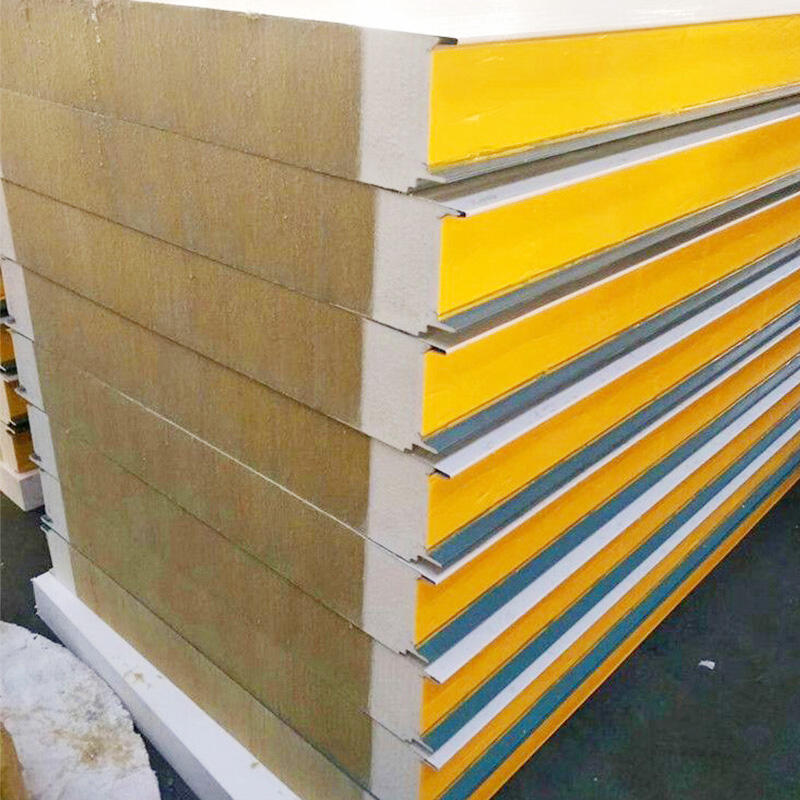
In modern construction and industrial facility design, thermal performance is no longer a secondary consideration — it is a primary engineering requirement. Whether the goal is maintaining cold chain integrity, reducing HVAC energy consumption, or meeting tightening building energy codes, the insulation material at the heart of a wall or roof system plays a decisive role. Among the many options available in today's market, polyurethane sandwich panels have established themselves as one of the most thermally efficient envelope solutions available, combining structural integrity with outstanding insulation properties in a single, factory-engineered component.
Understanding what makes polyurethane sandwich panels thermally superior requires looking beyond simple R-value comparisons. The full picture involves core chemistry, closed-cell foam physics, panel thickness options, installation continuity, and long-term insulation retention under real-world operating conditions. This article breaks down the specific thermal benefits that make polyurethane sandwich panels a leading choice for cold storage rooms, clean rooms, prefabricated buildings, and industrial roofing and wall systems across demanding environments.
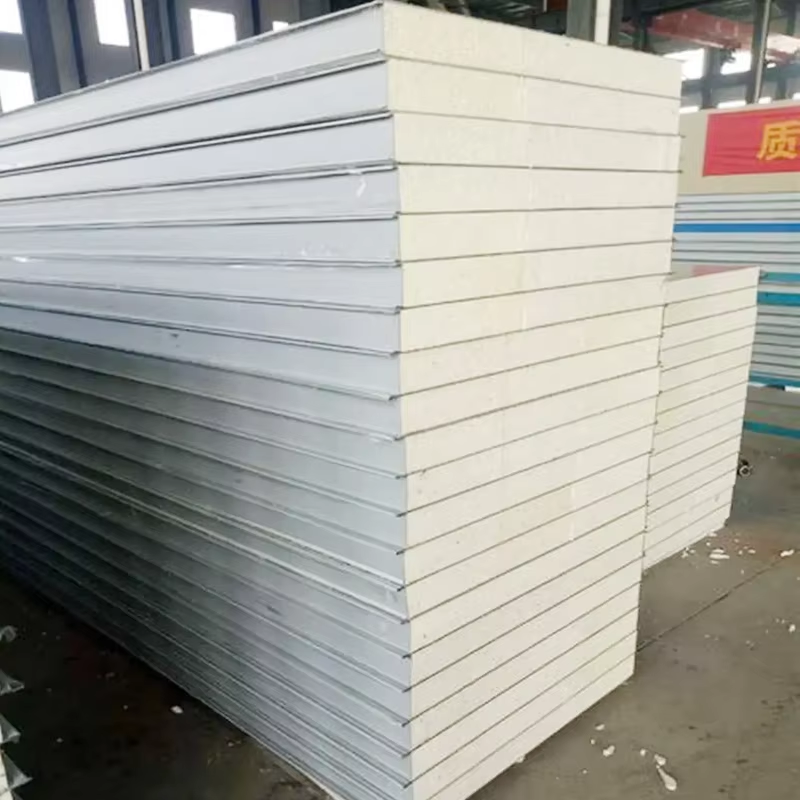
The Science Behind the Thermal Performance of Polyurethane Sandwich Panels
Closed-Cell Foam Structure and Low Thermal Conductivity
The thermal performance of polyurethane sandwich panels is rooted in the chemistry of their polyurethane foam core. During manufacturing, the foam undergoes a controlled expansion process that produces a tightly packed closed-cell structure. Unlike open-cell foams, which allow air movement and moisture absorption, the closed-cell architecture traps low-conductivity gas within millions of tiny sealed compartments.
This structure gives polyurethane sandwich panels an exceptionally low thermal conductivity value, typically ranging between 0.022 and 0.028 W/(m·K) depending on density and manufacturing conditions. For comparison, common alternatives such as mineral wool or expanded polystyrene exhibit significantly higher conductivity values, meaning that a thinner polyurethane panel can deliver equivalent or superior thermal resistance. This translates directly into weight savings, reduced structural load, and more usable interior floor area in cold storage or prefabricated building applications.
The density of the foam core — commonly specified between 38 and 42 kg/m³ for standard building panels — further contributes to dimensional stability and consistent insulation performance. Higher-density cores used in industrial cold storage applications offer even greater resistance to creep, compression, and thermal bridging over decades of continuous use.
Thermal Resistance Across Multiple Thicknesses
Polyurethane sandwich panels are available in a range of core thicknesses, with common options including 50mm, 75mm, 100mm, and 150mm. Each increment in thickness delivers a proportional increase in thermal resistance (R-value), giving engineers and facility designers precise control over the thermal envelope specification to match specific climate zone requirements or cold room operating temperature targets.
A 50mm polyurethane sandwich panel is typically suited for mild climate wall cladding, partition walls in ambient-temperature clean rooms, or light prefab structures. A 100mm panel offers substantially higher resistance, appropriate for medium-duty cold rooms operating between 0°C and +10°C. For deep-freeze cold storage environments requiring sustained temperatures at -18°C or below, 150mm panels are commonly specified, providing the thermal mass and resistance necessary to minimize heat ingress and reduce refrigeration compressor cycling.
The ability to select panel thickness with precision — and to use different thicknesses on roofs versus walls based on differential heat load — gives polyurethane sandwich panels a design flexibility that rigid board insulation assemblies with separate cladding layers cannot easily replicate. The entire assembly is integrated, factory-controlled, and consistent in thermal performance from one panel to the next.
Thermal Benefits in Cold Storage and Refrigerated Facility Applications
Minimizing Heat Ingress and Refrigeration Load
Cold storage facilities represent perhaps the most demanding thermal use case in the construction industry. Even minor insulation deficiencies result in measurable increases in refrigeration energy consumption, temperature fluctuation risks, and product spoilage potential. Polyurethane sandwich panels address this challenge directly through their combination of low conductivity core material, continuous insulation coverage, and interlocking joint designs that minimize thermal bridging at panel connections.
The insulating efficiency of polyurethane sandwich panels means that refrigeration systems can be sized more conservatively without compromising temperature set-point maintenance. Over the operational life of a cold room or refrigerated warehouse, this translates into significant energy cost savings. Studies in industrial refrigeration consistently demonstrate that superior envelope insulation yields proportionally lower operational energy expenditure, with payback periods on upgraded panel thickness often measured in months rather than years.
Beyond energy, the thermal stability that polyurethane sandwich panels provide directly supports food safety and pharmaceutical storage compliance. Regulatory standards in cold chain management require consistent temperature control within tight tolerances. A well-insulated panel system acts as a passive buffer, slowing temperature rise during door openings, defrost cycles, or brief equipment interruptions — giving the refrigeration system time to recover without breaching critical temperature thresholds.
Condensation Control Through Continuous Insulation
One of the less-discussed but critically important thermal benefits of polyurethane sandwich panels is their role in condensation control. When warm, humid ambient air contacts a cold surface, moisture condenses — creating conditions favorable to mold growth, corrosion, and structural degradation. Traditional insulation assemblies with discontinuous coverage create cold spots at framing members, fasteners, and joints where surface temperatures drop below dew point.
Polyurethane sandwich panels provide a thermally continuous barrier from one edge to the other. The metal skins of the panel remain at a temperature close to the interior ambient rather than dropping to the cold side temperature, because the foam core separates them thermally. This dramatically reduces the risk of surface condensation forming on the warm-side skin in cold storage or refrigerated environments, protecting both the panel system and the stored products from moisture-related damage.
The closed-cell foam core itself is inherently moisture-resistant, with very low water vapor permeability. This property ensures that polyurethane sandwich panels retain their insulation performance over time, unlike some fiber-based insulation materials that absorb moisture and lose R-value progressively under humid operating conditions.
Energy Efficiency and Building Envelope Performance
Contribution to Overall Building Energy Performance
In commercial and industrial buildings beyond cold storage, polyurethane sandwich panels contribute significantly to overall building energy performance when used as wall and roof cladding systems. By forming a high-performance thermal envelope, these panels reduce the differential between interior conditioned space and exterior ambient temperature, directly lowering the load on heating and cooling systems throughout the year.
The energy efficiency gains from using polyurethane sandwich panels are particularly relevant in regions with extreme seasonal temperature swings. In hot climates, roof panels with 100mm or 150mm cores substantially reduce solar heat gain transmission into conditioned spaces. In cold climates, the same panels minimize heat loss through the roof — which accounts for a disproportionately large share of total building heat loss due to warm air rising and the large surface area of industrial roofs.
For prefabricated buildings, modular facilities, and temporary structures where mechanical system sizing must be kept minimal, the insulation performance of polyurethane sandwich panels is often what makes the difference between a thermally comfortable interior and an unusable one. The compactness and high performance of these panels enable lightweight modular construction without sacrificing climate control capability.
Long-Term Thermal Stability and Performance Retention
A practical concern with any insulation material is how well it retains its declared thermal performance over years and decades of service. Polyurethane sandwich panels demonstrate strong long-term thermal stability under normal operating conditions. The closed-cell foam structure resists compression, settling, and thermal degradation significantly better than loose-fill or batt insulation alternatives.
While it is true that the low-conductivity gas within the closed-cell structure slowly diffuses over very long periods — a process known as aging — manufacturers account for this in their stated thermal conductivity values by referencing aged foam properties rather than initial values. This means that the published performance specifications of polyurethane sandwich panels already reflect real-world long-term performance rather than optimistic initial measurements.
The metal face skins of polyurethane sandwich panels also contribute to long-term performance by protecting the foam core from UV exposure, physical damage, and moisture intrusion at the panel surface. With proper installation and standard maintenance, the thermal performance of these panels remains highly consistent throughout the operational life of the building, which is often specified at 25 years or more for industrial facilities.
Thermal Advantages Specific to Clean Rooms and Hygienic Environments
Temperature Uniformity and Process Control
Clean rooms and pharmaceutical manufacturing facilities require not only contamination control but also precise temperature and humidity management. In these environments, polyurethane sandwich panels provide a thermally stable envelope that minimizes temperature fluctuations driven by external climate variation. The high insulation value of the panel core reduces the thermal load imposed on HVAC and precision climate control systems, allowing them to operate more efficiently and with less cycling.
Temperature uniformity within a clean room is directly supported by the continuous insulation coverage that polyurethane sandwich panels provide on walls, ceilings, and floors. Thermal bridges — the localized areas of high heat transfer that occur in conventional framed construction — can create cold or warm spots that disturb the thermal map of a controlled environment. The monolithic nature of each polyurethane sandwich panel and the interlocking joint system significantly reduce these thermal bridge effects.
The smooth, non-porous metal surface of clean room-grade polyurethane sandwich panels also contributes indirectly to thermal performance by enabling thorough cleaning without moisture penetration into the panel joints — maintaining the integrity of the thermal and hygienic envelope simultaneously.
Compatibility with Low-Temperature Processing Environments
Certain pharmaceutical, biotech, and food processing operations require wall and ceiling systems that can handle sustained exposure to low temperatures or repeated thermal cycling without structural degradation. Polyurethane sandwich panels are well-suited to these demands because the closed-cell foam core does not become brittle or lose adhesion to the metal skins at low service temperatures.
The thermal expansion coefficients of the foam core and metal skins are managed through panel design and bonding chemistry to prevent delamination or warping even under thermal cycling conditions. This structural resilience ensures that the thermal performance of polyurethane sandwich panels is maintained across repeated temperature transitions — a critical requirement in facilities that cycle between production temperatures and cleaning or defrost temperatures on a regular schedule.
For facilities that require partition walls separating warm production areas from cold staging areas, polyurethane sandwich panels offer the dual benefit of structural partition function and high thermal resistance in a single panel assembly — simplifying construction and reducing the risk of thermal performance gaps at the wall-to-roof junction.
FAQ
What thickness of polyurethane sandwich panels is recommended for a cold storage room?
The appropriate thickness depends on the operating temperature of the cold room. For standard refrigerated rooms operating between 0°C and +5°C, 100mm panels are commonly specified. For blast freezing or deep-freeze storage at -18°C to -25°C, 150mm panels are typically recommended to achieve the necessary thermal resistance and minimize refrigeration energy consumption. Local climate conditions and the specific heat load of the facility should also be factored into the final specification.
How do polyurethane sandwich panels compare thermally to mineral wool sandwich panels?
Polyurethane sandwich panels have a significantly lower thermal conductivity than mineral wool panels of the same thickness, meaning they deliver higher thermal resistance for a given panel thickness. A 100mm polyurethane panel will typically achieve an R-value considerably higher than a 100mm mineral wool panel. This advantage allows designers to use thinner polyurethane panels to meet the same thermal target, saving weight and interior space, or to use equivalent thickness panels to achieve superior thermal performance compared to mineral wool alternatives.
Do polyurethane sandwich panels maintain their thermal performance over time?
Yes, polyurethane sandwich panels are designed to maintain thermal performance over the long service life of the building. Manufacturers publish thermal conductivity values based on aged foam properties, which already account for the gradual gas diffusion that occurs over time. The metal face skins protect the foam core from UV, moisture, and physical damage, while the closed-cell structure resists compression and settling. Under normal operating conditions and with proper installation, the thermal performance of these panels remains highly stable for the expected building service life.
Can polyurethane sandwich panels be used for both roof and wall applications with equal thermal effectiveness?
Yes, polyurethane sandwich panels are manufactured in configurations suitable for both wall and roof applications. Roof panels are typically profiled with deeper ribs to handle structural spanning loads across purlins, while wall panels may have shallower profiles optimized for flatness and aesthetic finish. In both cases, the insulation core delivers the same thermal conductivity performance. For roofs, which are exposed to greater solar and climatic heat loads, designers often specify greater panel thickness compared to walls serving the same facility — typically stepping up by one thickness increment to compensate for the higher roof-level heat load.
Table of Contents
- The Science Behind the Thermal Performance of Polyurethane Sandwich Panels
- Thermal Benefits in Cold Storage and Refrigerated Facility Applications
- Energy Efficiency and Building Envelope Performance
- Thermal Advantages Specific to Clean Rooms and Hygienic Environments
-
FAQ
- What thickness of polyurethane sandwich panels is recommended for a cold storage room?
- How do polyurethane sandwich panels compare thermally to mineral wool sandwich panels?
- Do polyurethane sandwich panels maintain their thermal performance over time?
- Can polyurethane sandwich panels be used for both roof and wall applications with equal thermal effectiveness?