EN
EN
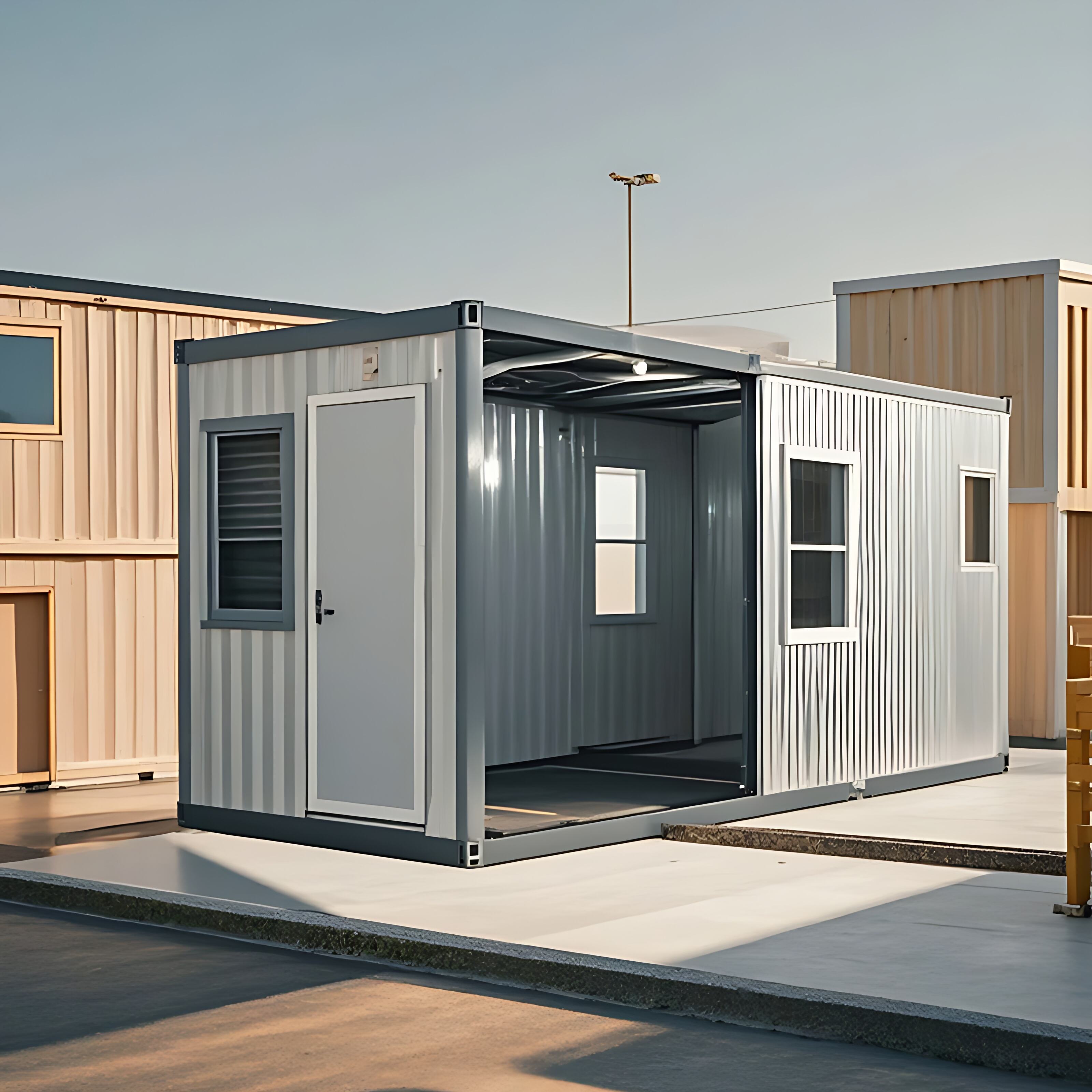
In the modern construction and temporary accommodation landscape, foldable container houses have emerged as one of the most practical and cost-effective structural solutions available to businesses, project managers, and site operators. Whether deployed on remote mining camps, construction sites, disaster relief zones, or temporary office setups, these structures offer a compelling combination of speed, durability, and logistical efficiency that traditional building methods simply cannot match. Understanding the key benefits of foldable container houses helps decision-makers choose the right solution for their specific operational needs.
The growing adoption of foldable container houses across industries is not a trend driven by novelty — it is driven by measurable, real-world advantages. From dramatically reduced assembly times to superior transportability and long-term structural resilience, foldable container houses address the core pain points that project operators face when setting up temporary or semi-permanent facilities. This article breaks down each of those benefits in detail, giving you a clear picture of why these structures are increasingly the preferred choice in demanding environments.
Rapid Deployment and Assembly Efficiency
Setup Completed in Hours, Not Days
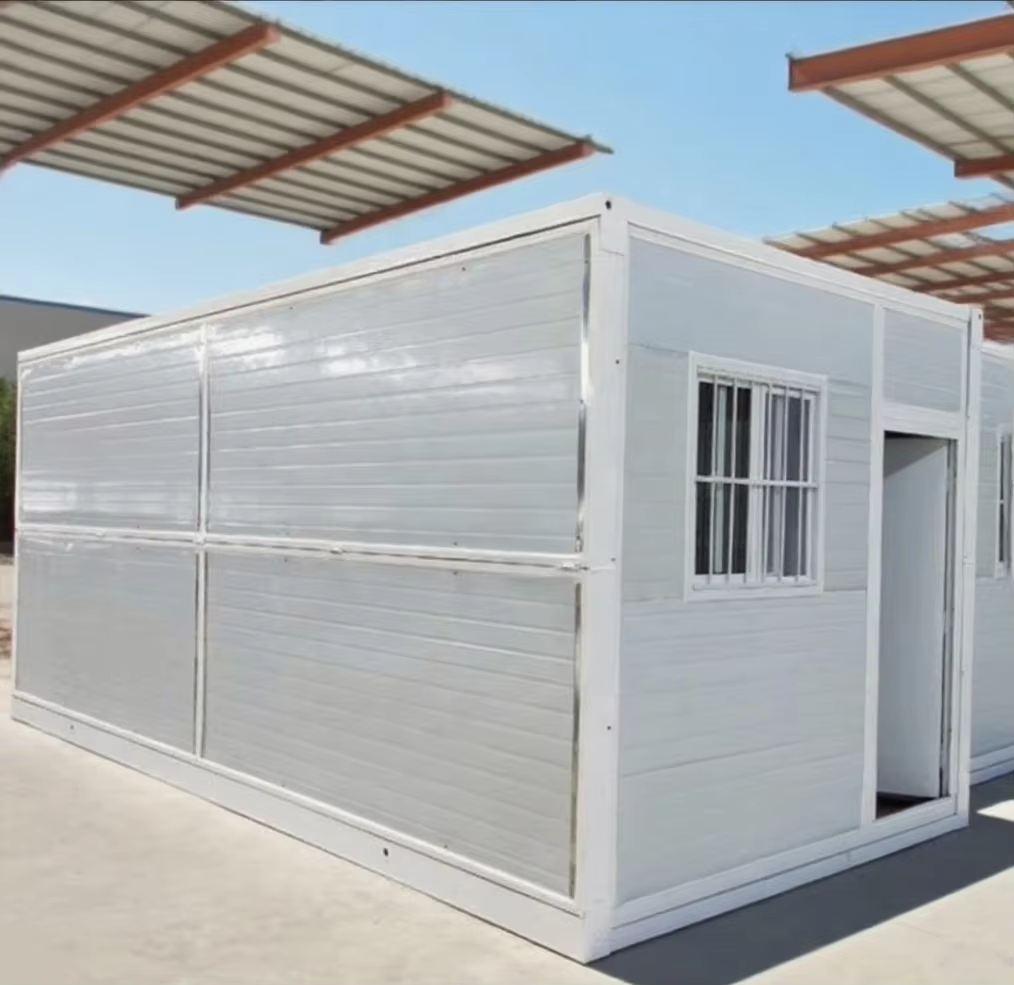
One of the most immediately impactful benefits of foldable container houses is the speed at which they can be assembled and made operational. Unlike conventional prefab structures that require multiple days of on-site labor, foldable container houses are engineered for rapid deployment — with many models capable of being fully erected within 48 hours or less. This is particularly valuable in industries like mining, oil and gas, and emergency response, where time directly translates to operational cost.
The folding mechanism built into these structures means that the core framework arrives pre-assembled and simply needs to be unfolded and locked into position. This eliminates the need for skilled construction crews and reduces dependency on local labor availability. A small team with basic equipment can have a fully functional unit ready for occupancy in a fraction of the time required by traditional methods.
For project managers working under tight timelines, the ability to deploy foldable container houses quickly is not just a convenience — it is a competitive advantage. Delays in setting up site offices, worker accommodations, or operational facilities can cascade into broader project delays, making rapid assembly a critical operational requirement.
Minimal On-Site Labor Requirements
Beyond raw speed, foldable container houses significantly reduce the labor intensity of the setup process. Because the structural components are pre-engineered and arrive in a near-complete state, the on-site work is largely limited to unfolding, securing, and connecting utilities. This reduces both labor costs and the risk of assembly errors that can compromise structural integrity.
In remote locations where skilled labor is scarce or expensive, this benefit becomes even more pronounced. Foldable container houses are designed so that a small, non-specialist team can complete the installation using straightforward instructions and standard tools. This self-sufficiency is a major operational advantage for projects in isolated or resource-limited environments.
Superior Transportability and Logistics Efficiency
Compact Folded Profile Reduces Shipping Costs
The defining physical characteristic of foldable container houses — their ability to collapse into a compact, flat-pack form — directly translates into significant logistics savings. When folded, multiple units can be stacked and shipped within a single standard shipping container, dramatically reducing per-unit freight costs compared to rigid modular structures that must be transported one at a time.
This stacking efficiency is particularly valuable for large-scale deployments where dozens or hundreds of units need to reach a remote site. The ability to consolidate shipments reduces the number of transport trips required, lowers fuel and logistics costs, and simplifies customs and import processes for international projects. For operators managing tight project budgets, the shipping economics of foldable container houses represent a meaningful cost advantage.
The compact folded profile also makes foldable container houses easier to handle at ports, rail yards, and remote delivery points where heavy lifting equipment may be limited. Standard forklifts and cranes can manage the units without specialized rigging, further reducing logistical complexity.
Redeployment Across Multiple Project Sites
Unlike permanent structures, foldable container houses are designed to be dismantled, folded, and redeployed to new locations with minimal effort. This reusability fundamentally changes the economics of temporary facility investment. Rather than writing off a structure at the end of a project, operators can fold the units, ship them to the next site, and redeploy them — recovering the full value of the initial investment across multiple project cycles.
This redeployment capability is especially valuable for companies that operate across multiple project sites on a rolling basis, such as mining contractors, infrastructure developers, and humanitarian organizations. Foldable container houses allow these operators to build a reusable asset base rather than incurring fresh facility costs on every new project.
Structural Durability and Weather Resistance
Anti-Corrosion Steel Construction for Harsh Environments
A common misconception about foldable container houses is that their portability comes at the expense of structural strength. In practice, high-quality foldable container houses are built from heavy-duty, anti-corrosion steel that is engineered to withstand the rigors of demanding industrial environments. The steel framework provides robust load-bearing capacity while the anti-corrosion treatment ensures long-term performance in humid, coastal, or chemically aggressive conditions.
For applications like mining camps, offshore support facilities, and construction site offices, the ability of foldable container houses to resist corrosion is not a minor feature — it is a fundamental requirement. Structures exposed to moisture, salt air, or industrial chemicals without adequate corrosion protection will degrade rapidly, creating safety risks and increasing maintenance costs. Anti-corrosion steel construction directly addresses this challenge.
The durability of foldable container houses also extends to their resistance to wind, rain, and temperature extremes. Properly engineered units are designed to meet relevant structural standards for wind loading and thermal performance, making them suitable for deployment in a wide range of climatic conditions without requiring extensive site-specific modifications.
Long Service Life Supports Return on Investment
The combination of heavy-duty steel construction and anti-corrosion treatment gives foldable container houses a service life that can span many years of active use across multiple deployments. This longevity is a critical factor in the total cost of ownership calculation. While the upfront cost of a high-quality foldable container house may be higher than a basic temporary structure, the ability to redeploy it across many projects over an extended service life produces a far more favorable return on investment.
Operators who factor in the full lifecycle cost — including purchase price, shipping, assembly, maintenance, and residual value — consistently find that foldable container houses outperform disposable or single-use temporary structures on a cost-per-use basis. This makes them a financially sound choice for organizations that regularly require temporary or semi-permanent facilities.
Versatility Across Applications and Industries
Adaptable to Diverse Operational Contexts
Foldable container houses are not a single-purpose product. Their modular, adaptable design makes them suitable for a wide range of applications, from worker accommodation and site offices to storage facilities, command centers, and emergency shelters. This versatility means that a single investment in foldable container houses can serve multiple functional roles across different projects and industries.
In the mining sector, foldable container houses are commonly used to establish camp facilities in remote locations where permanent construction is impractical. In construction, they serve as on-site offices and meeting rooms. In humanitarian response, they provide rapidly deployable shelter and medical facilities. This cross-sector applicability makes foldable container houses a highly flexible asset for organizations operating in dynamic environments.
The interior configuration of foldable container houses can also be customized to meet specific functional requirements. Insulation, electrical systems, plumbing, HVAC, and interior fittings can be integrated to create comfortable, fully functional spaces that meet the needs of the occupants and the demands of the operating environment.
Scalable Deployment for Projects of Any Size
Because foldable container houses are modular by nature, they can be deployed in any quantity to match the scale of a project. A small exploration team might require just two or three units, while a large mining camp or construction project might deploy dozens. The ability to scale the deployment up or down without complex planning or construction work gives project operators a level of flexibility that permanent structures cannot provide.
This scalability also supports phased project development. Operators can start with a minimal facility footprint and add foldable container houses incrementally as the project grows, avoiding the capital commitment of building for peak capacity from day one. When the project winds down, units can be removed in stages, matching the facility footprint to the actual operational need at each phase.
Cost Efficiency Across the Project Lifecycle
Lower Total Cost Compared to Conventional Temporary Structures
When evaluated on a total cost basis, foldable container houses consistently demonstrate strong cost efficiency relative to conventional temporary building methods. The savings begin at the logistics stage, where the compact folded profile reduces shipping costs, and continue through the assembly phase, where reduced labor requirements lower installation costs. Over the life of the asset, the ability to redeploy foldable container houses across multiple projects spreads the initial investment across many uses, further reducing the effective cost per deployment.
Maintenance costs for well-constructed foldable container houses are also relatively low, particularly when anti-corrosion steel is used. The robust construction minimizes the frequency and cost of repairs, and the standardized design makes replacement parts and maintenance procedures straightforward. This predictability in maintenance costs supports more accurate project budgeting.
Reduced Environmental and Site Impact
Foldable container houses also offer environmental and site management advantages that contribute to their overall cost efficiency. Because they are temporary and removable, they do not require permanent foundations or site preparation work that would need to be remediated at the end of the project. This reduces both the upfront site preparation cost and the end-of-project restoration cost, which can be substantial for permanent or semi-permanent structures.
The reusability of foldable container houses also reduces material waste compared to disposable temporary structures. Rather than demolishing and discarding a structure at the end of a project, operators fold and redeploy it, extending the useful life of the materials and reducing the environmental footprint of the facility. For organizations with sustainability commitments or operating in environmentally sensitive areas, this is a meaningful operational benefit.
FAQ
How quickly can foldable container houses be assembled on a remote site?
Most high-quality foldable container houses are designed for assembly within 48 hours by a small team without specialized construction skills. The pre-engineered folding mechanism means the core structure arrives largely pre-assembled, requiring only unfolding, securing, and utility connection on site. This rapid deployment capability is one of the primary reasons foldable container houses are favored for remote and time-sensitive projects.
Are foldable container houses suitable for long-term use in harsh climates?
Yes, when constructed from heavy-duty anti-corrosion steel and properly insulated, foldable container houses are well-suited for extended use in demanding climatic conditions including high humidity, coastal environments, and extreme temperatures. The key is selecting units built to appropriate structural and thermal standards for the specific deployment environment. Regular maintenance further extends service life in harsh conditions.
How many foldable container houses can be shipped in a single standard container?
The exact number depends on the unit dimensions and folded profile, but the compact flat-pack design of foldable container houses typically allows multiple units to be stacked and shipped within a single standard 40-foot shipping container. This stacking efficiency is one of the primary logistics advantages of foldable container houses over rigid modular structures, which must generally be transported one unit per container load.
Can foldable container houses be customized for specific functional requirements?
Yes, foldable container houses can be configured with a range of interior fittings and systems including insulation, electrical wiring, lighting, plumbing, air conditioning, and custom interior layouts. This customization capability allows operators to adapt foldable container houses to specific functional roles such as offices, sleeping quarters, medical facilities, or storage units, making them a highly versatile solution across different industries and project types.
Table of Contents
- Rapid Deployment and Assembly Efficiency
- Superior Transportability and Logistics Efficiency
- Structural Durability and Weather Resistance
- Versatility Across Applications and Industries
- Cost Efficiency Across the Project Lifecycle
-
FAQ
- How quickly can foldable container houses be assembled on a remote site?
- Are foldable container houses suitable for long-term use in harsh climates?
- How many foldable container houses can be shipped in a single standard container?
- Can foldable container houses be customized for specific functional requirements?