EN
EN
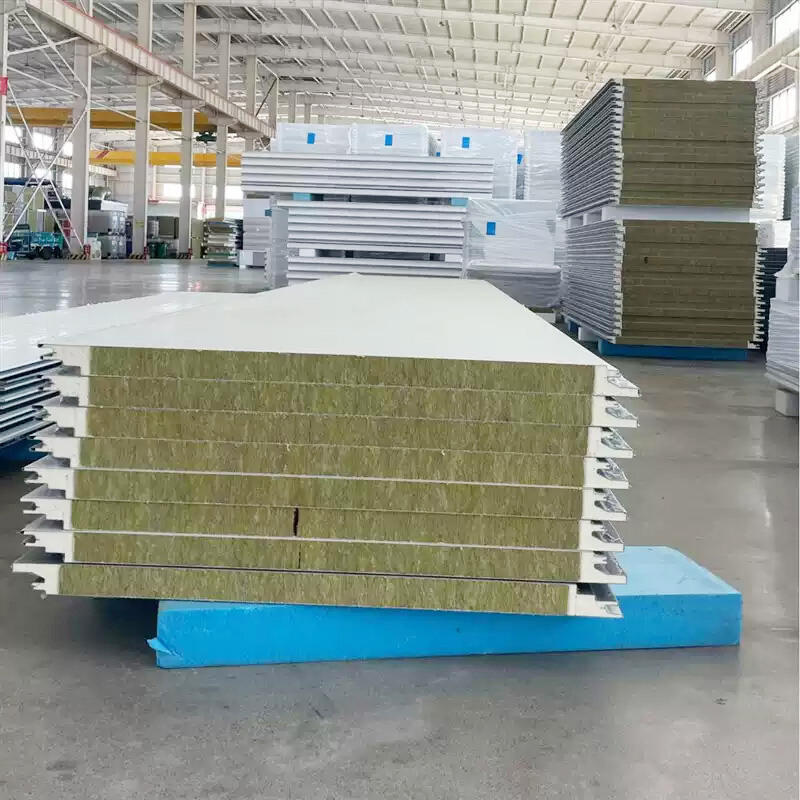
Selecting the right PU sandwich panel for your construction project is one of the most consequential decisions you will make during the planning phase. Whether you are building a cold storage facility, a clean room, an industrial warehouse, or a prefabricated residential unit, the performance characteristics of your chosen panel will directly affect energy efficiency, structural integrity, and long-term operating costs. With so many thickness options, facing materials, and density grades available on the market today, it is easy to feel overwhelmed by the sheer number of variables involved in this decision.
This guide is designed to cut through the complexity and give you a clear, practical framework for choosing the best PU sandwich panel suited to your specific application. A PU sandwich panel, also known as a polyurethane sandwich panel, consists of two rigid outer facings bonded to a polyurethane foam core. This construction delivers exceptional thermal insulation, structural rigidity, and moisture resistance — making it one of the most widely used building envelope materials in commercial, industrial, and cold-chain construction worldwide. Understanding how each project variable interacts with panel specifications will allow you to make a confident, well-informed choice.
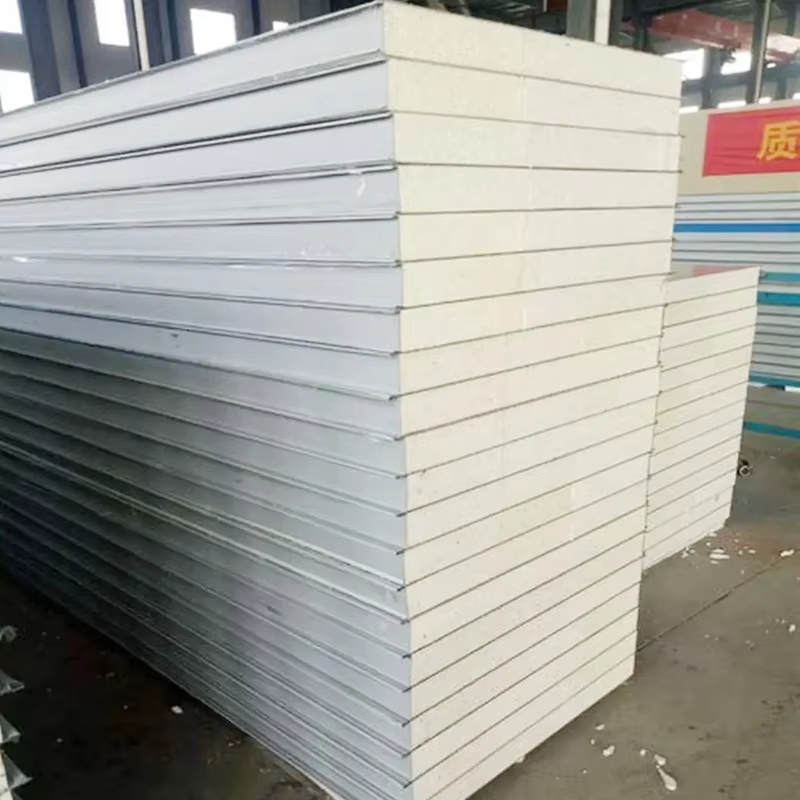
Understanding the Core Structure of a PU Sandwich Panel
The Role of the Polyurethane Core
The polyurethane foam core is the defining element that gives the PU sandwich panel its outstanding thermal performance. Polyurethane foam has one of the lowest thermal conductivity values among commercially available insulation materials, typically ranging from 0.022 to 0.028 W/m·K. This means even a relatively thin panel can achieve significant insulation performance compared to mineral wool or expanded polystyrene alternatives. For projects where maintaining precise internal temperatures is critical — such as pharmaceutical cold rooms, food processing facilities, or refrigerated warehouses — the thermal properties of the polyurethane core are a non-negotiable selection factor.
The density of the polyurethane foam core also plays a critical role in determining panel rigidity and long-term dimensional stability. Higher-density cores resist compression and creep over time, which is especially important in roof panel applications where load-bearing capacity matters. A properly formulated PU sandwich panel core will maintain its cellular structure and insulation performance for decades when installed correctly and kept away from prolonged moisture exposure. Specifying the correct core density for your application type ensures that the panel delivers reliable performance throughout its service life.
Facing Material Options and Their Impact
The outer facings of a PU sandwich panel serve multiple functions simultaneously: they provide structural stiffness, protect the foam core from environmental exposure, and determine the panel's compatibility with the specific service environment. The most commonly used facing material is pre-painted galvanized steel or galvalume steel, which offers a strong combination of corrosion resistance, mechanical durability, and surface finish quality. For standard industrial buildings, commercial roofing, and general-purpose wall cladding, a pre-painted steel-faced PU sandwich panel is typically the most cost-effective and reliable choice.
In environments with aggressive chemical exposure, high humidity, or stringent hygiene requirements — such as food processing plants, pharmaceutical clean rooms, or coastal industrial facilities — stainless steel or specialized food-grade lacquered steel facings may be required. These premium facing options significantly extend service life and maintain compliance with health and safety regulations. When evaluating a PU sandwich panel for such applications, always verify that the facing material meets relevant industry standards and that the bonding between the core and facing layers is certified to withstand the expected temperature cycling and mechanical stress.
Choosing the Right Panel Thickness for Your Application
Thermal Performance and Insulation Requirements
Panel thickness is perhaps the single most project-specific variable when selecting a PU sandwich panel. The required insulation level — expressed as a U-value or R-value depending on your regional standard — is determined by the intended internal temperature of the space, the external climate conditions, and the energy efficiency targets set for the project. A PU sandwich panel used in a standard ambient-temperature industrial building may only require 50mm of thickness to meet thermal comfort standards, whereas a deep-freeze cold storage room operating at -25°C could require panels of 150mm or even greater thickness to maintain energy efficiency.
It is worth engaging a thermal engineer or following published design guides for your specific application type before finalizing thickness specifications. Undersizing the panel thickness leads to excessive refrigeration or HVAC energy consumption, condensation problems, and potential failure to meet regulatory standards. Oversizing, on the other hand, increases material and installation costs unnecessarily. The most commonly available thicknesses for a PU sandwich panel are 50mm, 75mm, 100mm, and 150mm, each suited to a defined range of thermal performance requirements that align with common application categories.
Structural Load Considerations for Roof Panels
When a PU sandwich panel is used as a roofing element rather than a wall cladding, structural considerations come to the forefront alongside insulation performance. Roof panels must be able to carry dead loads from accumulated snow, maintenance foot traffic, and any rooftop equipment without deflecting beyond acceptable limits. The panel's spanning capability — the maximum distance it can bridge between structural purlins without requiring intermediate support — is a direct function of panel thickness, core density, and facing thickness.
Thicker panels with higher-density cores and heavier steel facings generally offer greater spanning capabilities, which can reduce the number of secondary steel members needed in the building frame and lower overall construction costs. However, they also add more weight per square meter, which must be factored into the primary structural design. Always consult load-span tables provided by the panel manufacturer and ensure that the selected PU sandwich panel meets or exceeds the design loads specified in your structural engineering calculations. For roofs with complex geometries or heavy imposed loads, a structural review is strongly advisable before panel selection is finalized.
Application-Specific Selection Criteria
Cold Storage and Refrigeration Facilities
Cold storage construction represents one of the most demanding application environments for a PU sandwich panel. The panel must perform reliably across a wide range of temperatures, resist moisture vapor transmission to prevent interstitial condensation within the panel structure, and maintain its insulating properties over a service life that commonly extends beyond twenty years. For cold rooms and refrigerated warehouses, a PU sandwich panel with a continuous foaming process — where the foam is injected and expanded under controlled pressure between the two facings — is preferred over discontinuous production methods, as it produces a more uniform cell structure and lower void content.
The joining system between adjacent panels is equally critical in cold storage applications. Cam-lock or tongue-and-groove joint profiles that create an airtight seal without thermal bridges are essential for maintaining the temperature integrity of the cold envelope. Any thermal bridge at panel joints will result in localized condensation, ice formation, and eventual structural deterioration. When specifying a PU sandwich panel for refrigerated applications, always review the joint detail drawings carefully and ensure that the proposed installation method eliminates or minimizes thermal bridging throughout the envelope assembly.
Clean Rooms and Pharmaceutical Environments
In clean room and pharmaceutical facility construction, the surface characteristics of a PU sandwich panel take on heightened importance. The panel facing must be non-porous, easy to clean and disinfect, resistant to the chemicals commonly used in cleaning protocols, and free of surface irregularities that could harbor microbial growth. Panels with smooth, flat steel facings finished with food-grade or pharmaceutical-grade coatings are typically specified for these environments, along with sealed joint systems that prevent particle ingress or microbial infiltration.
The fire performance of the panel is also a major consideration in clean room design, where the containment of fire hazards is strictly regulated. Certain formulations of polyurethane foam incorporate fire-retardant additives that improve the panel's reaction-to-fire classification, reducing flame spread and limiting smoke production in the event of a fire incident. When selecting a PU sandwich panel for a clean room project, always verify the fire rating in accordance with the applicable building code — such as EN 13501-1 in Europe or ASTM E84 in North America — and confirm that the certification testing reflects the actual panel configuration you intend to install.
Evaluating Quality and Compliance Factors
Certifications and Standards to Look For
A high-quality PU sandwich panel should come with verifiable third-party test certifications covering thermal performance, fire resistance, structural load capacity, and dimensional tolerances. Before committing to any supplier or product specification, request full test reports and confirm that the testing was conducted on panels with the same thickness, facing type, and core density as the product you plan to purchase. Some suppliers present certifications obtained on different configurations, which may not accurately represent the performance of the specific product being delivered to your project.
In international construction projects, compliance with regional standards is essential for insurance, regulatory approval, and project handover acceptance. Common standards governing PU sandwich panel products include ISO, EN, and local national building codes that specify minimum thermal resistance, fire performance, and mechanical property requirements. Ensure that your supplier can provide documentation that the PU sandwich panel meets all applicable standards for your project's jurisdiction and that the documentation is current and traceable to a recognized testing laboratory.
Production Quality and Dimensional Consistency
Dimensional consistency across a panel batch directly affects installation speed, joint quality, and the overall airtightness of the finished building envelope. A PU sandwich panel that varies significantly in thickness, width, or flatness between individual panels will create installation problems that are time-consuming and costly to resolve on site. When evaluating suppliers, ask about their production process controls, dimensional tolerance specifications, and the quality management systems they operate under — such as ISO 9001 certification — as these are reliable indicators of consistent product quality.
Visual inspection of sample panels before bulk ordering is also a worthwhile step for large-scale projects. Check for uniform foam cell structure visible at cut edges, consistent adhesion between the foam core and facings, absence of delamination, and a smooth, uniform surface finish on both steel facings. A well-manufactured PU sandwich panel will exhibit tight, uniform foam cells throughout the cross-section and a strong mechanical bond between the core and facings that resists peeling even under manual flexural stress. These physical indicators correlate strongly with overall product quality and long-term performance.
Installation and Project Planning Considerations
Panel Orientation and Building Geometry
The orientation in which a PU sandwich panel is installed — horizontally or vertically for wall panels, and at varying roof pitches for roof panels — affects both the structural performance and the detailing requirements of the installation. Horizontal wall panel orientations typically result in exposed horizontal joints at each panel course, which must be carefully flashed and sealed to prevent water ingress. Vertical orientations place the joints in a more favorable position for weather resistance but may require longer panel lengths that are more challenging to handle and transport on site.
For roof applications, the minimum recommended pitch for a PU sandwich panel is generally 3 to 5 degrees, below which standing water can accumulate at laps and joints, leading to accelerated corrosion of the steel facings and potential leakage. Complex roof geometries with multiple valleys, ridges, and penetrations require careful detailing to maintain the thermal and weather integrity of the PU sandwich panel envelope. Engaging experienced installation contractors who are familiar with the specific panel system being used is strongly recommended to avoid common installation errors that compromise long-term performance.
Logistics, Handling, and Storage Requirements
A PU sandwich panel is a precision-manufactured product that requires careful handling and storage to arrive at the point of installation in undamaged condition. Panels should be stored flat on level supports, protected from direct sunlight and rainfall, and kept clear of ground moisture. Prolonged ultraviolet exposure prior to installation can degrade the surface coating of steel-faced panels, and moisture infiltration at cut edges or damaged areas can initiate corrosion of the steel facing that will compromise both appearance and durability.
Transportation of long panels requires adequate support points to prevent bending or warping during transit, and lifting procedures on site must use spreader beams or vacuum lifters to distribute the load evenly across the panel length. Scratches or dents in the steel facing should be repaired with compatible touch-up paint as soon as they are identified to prevent corrosion initiation. Planning the logistics of panel delivery, on-site storage, and installation sequence in advance is an often-overlooked but important aspect of ensuring that the PU sandwich panel performs as intended throughout its service life.
FAQ
What thickness of PU sandwich panel is best for a cold storage room?
The optimal thickness depends on the target storage temperature and local climate conditions. For standard chilled storage between 0°C and 5°C, a 100mm PU sandwich panel is commonly specified. For deep-freeze rooms operating at -18°C to -25°C, 150mm or greater is typically required to achieve the necessary thermal resistance and keep refrigeration energy consumption within acceptable limits. A thermal calculation performed by a qualified engineer will confirm the exact specification for your project conditions.
Can a PU sandwich panel be used for both walls and roofs?
Yes, PU sandwich panel products are available in configurations specifically designed for wall cladding and others optimized for roof applications. Roof-specific panels typically feature profiled steel facings that provide additional structural rigidity and enhanced water-shedding geometry at laps and joints. Wall panels often have flatter or lightly profiled facings for aesthetic and functional reasons. Always confirm with your supplier that the panel configuration you select is certified and recommended for the specific application — roof or wall — that you intend to use it for.
How long does a PU sandwich panel last in an industrial environment?
A properly specified and installed PU sandwich panel in a standard industrial environment can deliver a service life of 25 to 40 years or more when the facing material is correctly selected for the exposure conditions and the installation is carried out in accordance with the manufacturer's guidelines. Key factors affecting longevity include the coating quality of the steel facing, the adequacy of joint sealing, maintenance of any surface damage, and the avoidance of prolonged exposure to aggressive chemicals that are incompatible with the facing specification.
Is a PU sandwich panel fire resistant?
Standard polyurethane foam is combustible, but modern PU sandwich panel products are formulated with fire-retardant additives that significantly improve their fire performance compared to untreated foam. The fire resistance classification of a panel depends on its specific formulation, facing material, and thickness, and must be verified through accredited third-party testing to applicable standards such as EN 13501-1. For applications with strict fire safety requirements — such as pharmaceutical facilities, food plants, and public buildings — always specify a PU sandwich panel with a documented fire rating that meets or exceeds the minimum classification required by the local building code.