EN
EN
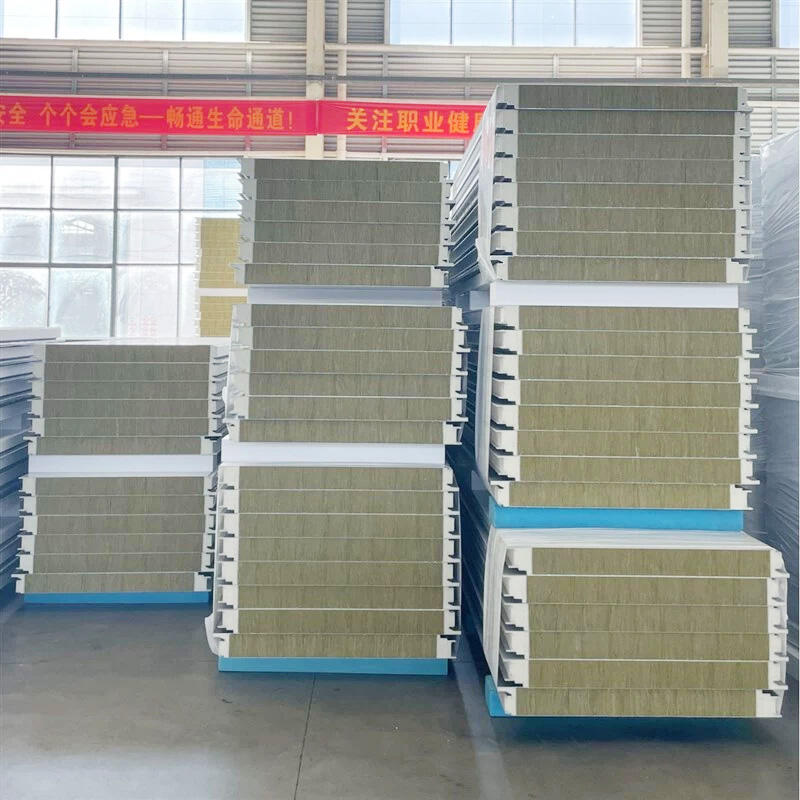
When it comes to selecting building materials for cold storage facilities, workshops, hotels, or prefabricated structures, the decision carries significant long-term consequences for energy efficiency, structural integrity, and operational cost. PU sandwich panels have emerged as a compelling alternative to conventional construction materials, and understanding why requires a close look at what traditional materials actually fail to deliver in modern industrial and commercial applications.
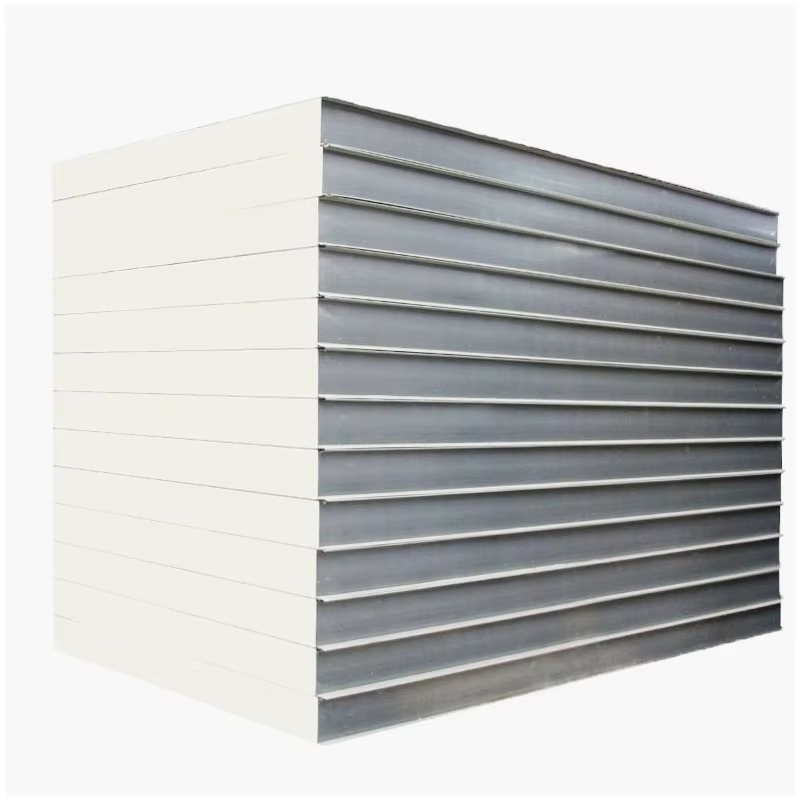
PU sandwich panels — constructed with a polyurethane foam core bonded between two rigid metal facings — offer a fundamentally different performance profile compared to brick, concrete, or basic metal sheeting. The reasons to choose PU sandwich panels over traditional materials are rooted in measurable advantages: superior thermal insulation, faster installation, lighter structural load, and better lifecycle economics. This article examines each of these reasons in depth so that procurement managers, project engineers, and facility developers can make well-informed decisions.
The Thermal Insulation Advantage That Traditional Materials Cannot Match
How Polyurethane Foam Outperforms Conventional Insulation
The core of PU sandwich panels is polyurethane foam, one of the most thermally efficient insulation materials available in construction today. Its closed-cell structure traps gas within millions of tiny cells, dramatically reducing heat transfer through conduction and convection. This physical property gives PU sandwich panels a thermal conductivity value typically in the range of 0.022 to 0.028 W/m·K, which is significantly lower than materials like concrete, brick, or even mineral wool-filled panels.
Traditional materials such as brick walls or poured concrete require substantial thickness to achieve even moderate insulation performance. A standard brick wall may need to be 300 to 400 mm thick to approach the thermal resistance that a 100 mm PU sandwich panel delivers. This difference is not marginal — it represents a fundamental gap in energy performance that directly affects heating and cooling costs over the life of a building.
For cold storage applications in particular, this distinction is critical. Maintaining precise low temperatures in a refrigerated warehouse or food processing facility demands that the building envelope minimizes thermal bridging and heat ingress. PU sandwich panels are specifically engineered for this purpose, and their insulation consistency across the panel surface is far more reliable than composite traditional wall assemblies that may develop thermal weak points over time.
Energy Cost Implications Over the Building Lifecycle
Choosing PU sandwich panels over traditional materials is not just a construction decision — it is an energy investment decision. Buildings insulated with PU sandwich panels consistently demonstrate lower HVAC energy consumption compared to equivalent structures built with conventional materials. For facilities that operate refrigeration systems, air conditioning, or industrial climate control around the clock, these savings compound significantly over years of operation.
Traditional materials often require additional insulation layers to meet modern energy codes, which adds both material cost and installation complexity. PU sandwich panels integrate the structural facing and insulation core into a single factory-produced unit, eliminating the need for separate insulation installation steps and reducing the risk of installation errors that degrade thermal performance.
Project developers who evaluate total cost of ownership rather than just upfront material cost consistently find that PU sandwich panels deliver a more favorable financial outcome. The energy savings generated over a 10 to 20-year building lifespan typically exceed the initial cost premium over basic traditional materials, making the choice economically rational as well as technically sound.
Speed and Simplicity of Construction
Why Installation Efficiency Matters in Commercial Projects
One of the most practical reasons to choose PU sandwich panels over traditional materials is the dramatic reduction in construction time. Traditional masonry or concrete construction involves multiple sequential trades — foundation work, block laying, plastering, waterproofing, and insulation application — each requiring curing time and coordination. PU sandwich panels arrive on site as finished, ready-to-install units that can be erected by a small crew using standard mechanical fasteners and interlocking joint systems.
For commercial and industrial projects where time-to-operation directly affects revenue, this speed advantage is substantial. A cold storage facility or workshop built with PU sandwich panels can be enclosed and operational in a fraction of the time required for an equivalent masonry structure. This accelerates the return on investment and reduces the exposure to weather-related construction delays.
The prefabricated nature of PU sandwich panels also means that quality is controlled in a factory environment rather than depending on on-site workmanship. Dimensional consistency, foam density, and facing adhesion are all verified during manufacturing, which reduces the variability that often affects traditional construction quality.
Flexibility for Walls, Roofs, and Specialized Applications
PU sandwich panels are available in a range of thicknesses — commonly 50 mm, 75 mm, 100 mm, and 150 mm — allowing engineers to select the appropriate thermal and structural specification for each application. The same panel system can be used for exterior walls, interior partition walls, and roof assemblies, simplifying procurement and reducing the number of different material types on a project site.
Traditional materials rarely offer this kind of application flexibility within a single product family. Brick is used for walls but not roofs. Metal decking requires separate insulation. Concrete panels are heavy and require crane handling. PU sandwich panels, by contrast, are lightweight enough to be handled manually in many configurations, reducing equipment requirements and site logistics complexity.
This versatility makes PU sandwich panels particularly well-suited for hotels, modular office buildings, agricultural storage, and food processing plants — environments where the building envelope must perform consistently across multiple surface types and orientations.
Structural Performance and Durability Compared to Traditional Alternatives
Load-Bearing Capacity and Lightweight Structural Benefits
A common misconception about PU sandwich panels is that their lightweight nature implies structural weakness. In practice, the composite construction of metal facings bonded to a rigid polyurethane core creates a panel with excellent bending stiffness and load distribution characteristics. The structural behavior of PU sandwich panels under wind, snow, and point loads has been extensively studied, and properly specified panels meet the structural requirements of most commercial and industrial building applications.
The lightweight nature of PU sandwich panels is actually a structural advantage in many scenarios. Lighter cladding systems reduce the dead load on primary structural frames, which can allow for lighter and more economical steel or concrete substructures. In seismic zones, reducing the mass of the building envelope directly reduces the seismic forces that the structure must resist, which can translate into meaningful cost savings in the structural design.
Traditional heavy materials like brick and concrete add significant dead load to a building. While this mass can be beneficial in some thermal mass applications, it is generally a liability in prefabricated and modular construction where speed, transportability, and foundation economy are priorities.
Resistance to Moisture, Corrosion, and Environmental Degradation
The closed-cell polyurethane foam core in PU sandwich panels has inherently low water absorption, which means the insulation performance does not degrade significantly when exposed to humidity or incidental moisture. Traditional insulation materials such as mineral wool or fiberglass batts can absorb moisture and lose a substantial portion of their thermal resistance when wet, creating long-term performance problems in humid industrial environments.
The metal facings of PU sandwich panels are typically coated with corrosion-resistant finishes — commonly galvanized steel with a polyester or PVDF topcoat — that provide durable protection against the atmospheric conditions found in coastal, industrial, or high-humidity environments. This surface durability reduces maintenance requirements compared to painted concrete or unprotected metal sheeting.
Over a 20 to 30-year service life, PU sandwich panels generally require less remedial maintenance than traditional wall systems that may experience cracking, spalling, efflorescence, or insulation degradation. This durability factor reinforces the lifecycle cost argument for choosing PU sandwich panels over conventional alternatives.
Practical Suitability Across Key Industry Applications
Cold Storage and Refrigerated Warehousing
Cold storage is arguably the application where PU sandwich panels demonstrate their most decisive advantage over traditional materials. Refrigerated warehouses, blast freezers, and controlled atmosphere storage rooms all require a building envelope that maintains extremely low temperatures with minimal energy input. The high thermal resistance of PU sandwich panels, combined with their airtight joint systems, makes them the standard choice for professional cold chain infrastructure worldwide.
Traditional materials simply cannot achieve the required insulation performance at practical wall thicknesses for cold storage applications. A cold room built with brick and conventional insulation would require walls of impractical thickness and would still likely underperform a well-specified PU sandwich panel system in terms of thermal bridging and air infiltration control.
The hygienic surface finish of PU sandwich panels — smooth, non-porous metal facings that are easy to clean — also makes them suitable for food-grade environments where sanitation standards are strictly enforced. This is an additional practical reason why cold storage operators consistently choose PU sandwich panels over traditional construction approaches.
Workshops, Hotels, and Modular Commercial Buildings
Beyond cold storage, PU sandwich panels are widely used in industrial workshops, prefabricated hotels, and modular commercial facilities where construction speed and thermal comfort are both important. In workshop environments, the panels provide a clean, well-insulated building envelope that improves worker comfort and reduces heating costs in colder climates.
For hotel and hospitality projects in remote or rapidly developing locations, the ability to erect a fully insulated, aesthetically acceptable building in weeks rather than months is a significant competitive advantage. PU sandwich panels enable this kind of accelerated construction timeline without sacrificing the thermal and acoustic performance that hotel guests expect.
The combination of thermal efficiency, construction speed, design flexibility, and long-term durability makes PU sandwich panels a rational choice across a wide range of commercial and industrial building types — not just for specialized cold storage applications.
FAQ
What thickness of PU sandwich panel is appropriate for cold storage applications?
The appropriate thickness depends on the target storage temperature and the local climate. For standard refrigerated storage above 0°C, 100 mm PU sandwich panels are commonly specified. For blast freezing or deep freeze applications at -18°C or below, 150 mm panels are typically recommended to achieve the required thermal resistance and minimize refrigeration energy consumption.
How do PU sandwich panels perform in terms of fire resistance compared to traditional materials?
Standard polyurethane foam is combustible, which is an important consideration in fire safety design. However, PU sandwich panels used in commercial and industrial construction are typically manufactured with fire-retardant additives in the foam core and are tested to recognized fire performance standards. The metal facings also contribute to fire containment. For applications with strict fire code requirements, it is important to specify panels with appropriate fire ratings and to consult local building regulations.
Can PU sandwich panels be used for both walls and roofs in the same building?
Yes, PU sandwich panels are designed for use in both wall and roof applications. Roof panels are typically profiled or ribbed to provide additional structural stiffness and to facilitate water drainage, while wall panels may have a flat or lightly profiled facing. Using the same panel system for both walls and roofs simplifies procurement, ensures consistent thermal performance across the entire building envelope, and reduces the number of different joint and fixing details that need to be managed on site.
What is the expected service life of a building constructed with PU sandwich panels?
When properly installed and maintained, PU sandwich panels can deliver a service life of 25 to 30 years or more. The longevity depends on the quality of the panel manufacturing, the corrosion resistance of the facing coatings, the quality of the installation, and the environmental conditions at the site. Regular inspection of joints, fixings, and surface coatings — and prompt remediation of any damage — will maximize the service life and preserve the thermal performance of the building envelope over time.
Table of Contents
- The Thermal Insulation Advantage That Traditional Materials Cannot Match
- Speed and Simplicity of Construction
- Structural Performance and Durability Compared to Traditional Alternatives
- Practical Suitability Across Key Industry Applications
-
FAQ
- What thickness of PU sandwich panel is appropriate for cold storage applications?
- How do PU sandwich panels perform in terms of fire resistance compared to traditional materials?
- Can PU sandwich panels be used for both walls and roofs in the same building?
- What is the expected service life of a building constructed with PU sandwich panels?